
- Climate change, the greatest environmental challenge of current era, affects human health badly. Natural hazards such as storms, droughts, excessive rains, floods, droughts and increasing temperature always threaten human health. South Asian rural women bear more household responsibilities than men in terms of fetching water and burning biomass fuel for cooking and heating. To obtain these resources women have to go out and are more exposed to outdoor environment and the increased exposure make them more amenable to the effects of changing climatic and weather patterns. The objective of this study is to document women health impacts under climate change in District Rawalpindi, Pakistan. We find that climate change increases the incidence of diseases which affect physical health. In developing countries, extreme weather patterns disproportionally affect vulnerable population like women, children and others bear burden of illness. Pakistan also faces heat waves fluctuation during summer and extreme rainfall pattern which have severe effect on overall health of individuals. We conclude that climatic changes (increasing heat intensity, dry spells, unusual rains and others) affect women health badly. The state has to improve our climate by offering effective policies. This may include reforestation, plantation in and outside homes and environmental friendly policies like renewable energy that is a shift from coal and oil investing energy projects. Increase of green areas within urban localities is also needed.
- Key Words:
- Climate Change, Weather Conditions, Physical health, Women's Health
- Introduction
- Literature Review
- Research Methods and Data Analysis
- Results
- Discussion and Concluding Remarks
Abstract
Climate change is the greatest environmental challenge of current era which affects human health badly. Global climate and weather conditions are changing drastically. History is witness to extreme weather conditions negatively influencing human health (Haines, 2008; Patil & Deepa, 2007; Kovats & Akhtar, 2008; Campbell-Lendrum, Bertollini, Neira, Ebi, & McMichael, 2009). In 1988, infectious diseases for instance malaria, dengue fever, leptospirosis soaring, and cholera spread from heavy rains that continued for 3 days in Central America (Epstein, Mills, Frith, Linden, Thomas, & Weireter, 2005). Approximately, 2.5 million people were affected by the floods triggered by heavy rains of four days after cyclone hit the provinces of Baluchistan and Sindh in the South West region of Pakistan during June 2008. Many areas have been cut off due to rising water. Malaria rose from rain and cyclones in Mozambique also (Epstein, Mills, Frith, Linden, Thomas, & Weireter, 2005). Likewise, in 2003, heat waves killed 10,000 people in Europe and more than 10,000 in France (Kovats & Hajat, 2008). All credit goes to physical environment and changing global climate.
Climate change is affecting local weather with the incidence of stagnant air events and recurrent heat waves that distresses human health (Ahern, Kovats, Wilkinson, Few, & Matthies, 2005). As, natural hazards always act as a threat to human health for instance, storms, droughts, too much rains, floods, dry spells, increasing temperature and landslides. The after effects of such events become worse due to lack of human knowledge to absorb their consequences. Deforestation and biodiversity loss are the main human actions which make these natural hazards worse for health on earth and global echo system (Barton & Grant, 2006). According to Intergovernmental Panel on Climate Change (IPCC, 2007), humans are contributing in rising concentration of greenhouse gases through transport, agriculture, land use and power generation (McMichael, Friel, Nyong & Corvalan, 2008; Haines, 2008).
In developing countries, every 19th person whereas, in OECD countries, 1 out of 1500 face health issues caused by climate change (IPCC, 2014). In LDCs, people living in rural areas are more vulnerable as they rely on natural resources to earn their living. In these areas, women are more susceptible than men to climatic changes since majority of the world population comprise women which belong to poor class and have to survive on natural resources which are at threat to changing climate (McKulka, 2009). In South Asia, rural women bear more HH responsibilities than men in terms of fetching and securing water and burning biomass fuel for cooking and heating. To obtain these resources women have to go out and are much exposed to outdoor environment, this increased exposure leads them to face changing climatic and weather patterns. According to Sierra Magazine Staff (2000) majority (more than 66%) of world's poor are women. Women are disproportionately vulnerable as they face curtailed access to education, basic health services, employment opportunities, salaries inequality and direct violence (Heise, Raikes, Watts, & Zwi, 1994).
Sustainable Development Goals (SDGs) strive to alleviate environmental health risks to vulnerable groups of LDCs. WHO Global Health figures of Pakistan show that 200/100,000 deaths are due to environmental factors. The objective of this study is to document women health impacts of climate change of District Rawalpindi, Pakistan. Current study intends to analyze the issues related to physical environment (climatic conditions) and its links with physical health of ever married women in District Rawalpindi, Pakistan. This study tries to answer the question: Do changing climatic conditions (adequate/inadequate) have any association with women's physical health status?
Keywords
Climate Change, Weather Conditions, Physical health, Women's Health
Hypotheses
Environmental factor plays a vital role in individual's health specifically on women. The literature on the links of the climatic changes with women's health status envisages diverse effects. Therefore, it is the dire need to estimate and document effect of climate change on women's health.
Climate change, most important aspect of physical environment, is one of the emerging threats to global health. Climate change is likely to reduce cold extremes while increases frequency, intensity, and intervals of heat waves. Climate change might damage human health in many ways, comprising adverse variations in food production (Rosenzweig, 2011), concentrations of outdoor air pollutants (Bernard, Samet, Grambsch, Ebi & Romieu, 2001; Knowlton, Rosenthal, Hogrefe, Lynn, Gaffin, Goldberg & Kinney, 2004; Haines & Patz, 2004), thermal stress (Martens, 1998), malaria (Loevinsohn, 1994; Tanser, Sharp, & Le Sueur, 2003), aeroallergens (Beggs, 2004), waterborne diseases (Casman, Fischhoff, Small, Dowlatabadi, Rose, & Morgan, 2001; Charron, Thomas, Waltner-Toews, Aramini, Edge, Kent & Wilson, 2004), dengue fever (Hales, De Wet, Maindonald & Woodward, 2002), extreme events (Knutson, Tuleya & Kurihara, 1998; Ikeda, Yoshitani & Terakawa, 2005) and other diseases (Reiter, 1998; Patz, Campbell-Lendrum, Holloway & Foley, 2005). The hypothesis to be tested is:
H1a: Changing climatic pattern is negatively associated with women health status
Since last few decades, health economists pay much of their attention towards maternal and child health care only. But in recent decades women health gains attention worldwide in broader concept of biological, gender and social determinants. Exploration of women health is in transition phase. In this regard, there is a dire need to investigate how women health affects through physical environment. The exposure of interest in this study lies on physical environment spectrum where we discuss theoretically and analyse empirically the challenges faced by women health due to environmental variability and changing weather pattern. To our knowledge, this is the first study of its kind which analyses empirically the relationship between women health and climate change.
This paper is arranged as follows: Section 2 entails previous literature. Section 3 emphasizes on methods and data analysis. Section 4 gives detailed picture of empirical results along with robustness while Section 5 concludes the study.
Climate change is one of the emerging threats to worldwide health. Several studies
have examined the short and long run problems related to climate change on health, literature claims that higher mortality rates are associated with intensive heat and cold waves (Lee, Steer & Filippi, 2006; Deschenes & Moretti, 2009; Gosling, Lowe, McGregor, Pelling & Malamud, 2009; Deschenes & Greenstone, 2011; Barreca, 2012; Li, Horton & Kinney, 2013; Gasparrini, Guo, Hashizume, Lavigne, Zanobetti, Schwartz, & Leone, 2015).
Many widespread human diseases including mortality, morbidity, malnutrition and infectious diseases are related to climate fluctuations: extreme heat, cold and storms (Patz, Epstein, Burke & Balbus, 1996; Kovats, Campbell-Lendrum, McMichel, Woodward & Cox, 2001; Stott, Stone & Allen, 2004). It is projected that global average temperature will rise between 1.40C - 5.80C by the end of this century which in turn will raise sea level. Extremes of the floods and droughts are anticipated to upsurge with warmer temperatures. The most vulnerable areas are regions around the Pacific and Indian oceans, Sub-Saharan Africa. Above facts paint a grim picture of environment about the future.
Haines, Kovats, Campbell-Lendrum & Corvalán (2006) argue that climate is changing due to accumulation of greenhouse gases in atmosphere that result from burning of fossil fuels. Chemical reactions and volatile organic compounds that formulate ozone are highly sensitive to climate change (Sillman & Samson, 1995; Constable, Guenther, Schimel & Monson, 1999; Aw & Kleeman, 2003; Seinfeld & Pandis, 2016). Ozone concentration has adverse effects on health such as emergency hospital admissions, asthma and lungs issues (Lippmann, 1989; Dockery & Pope, 1994; Thurston & Ito, 1999; Bell, Goldberg, Hogrefe, Kinney, Knowlton, Lynn & Patz, 2007).
Climate change influence health outcomes through several ways, for instance, heat waves, droughts and floods, vector-borne diseases, malnutrition and risk of disasters. According to Dr. Asif Zafar Bhatti in a report on "Risks in flood areas of Pakistan", women and children are more vulnerable in floods. They have to face starvation, water borne diseases and lack of medical facilities that affect them badly. The girls, children and women are in real danger during flood times due to human trafficking, sexual abuse and lack of shelter. During 2010 flood in Pakistan, many 34,000 women including paramedical staff (lady health worker, LHW, LHVs, midwives and nurses) were missing and were victim of sexual abuse, violence, trafficking and injured (these are unauthorized figures according to a report by Tahira Abdullah). People who have experienced flood suffer from common psychological disorders. In addition, it also affects vector disease distribution (e.g. incidence of dengue, malaria and diarrheal diseases). Climate change influence goods and services (necessary for human health) by influencing ecosystem and biodiversity. Climatic impact is more vulnerable for young mothers who spend most of their time outside home comparative to those working mothers who spend time in ACs.
Women's health risk need attention to prevent harmful effects of changing physical environment which is the result of increasing temperatures inside and outside homes and release of chemicals and toxins in air. Although physical environment is easily accessible to all, yet its consequences are expensive in terms of health. Despite a huge strand of literature focused on climatic conditions and related effects of physical environment on health of individuals but less attention has been paid on the most important sector of the economy that is women. Women of lower income group are generally more vulnerable as they have to perform their HH tasks and also have to perform outdoor activities even in unacceptable weather conditions also. Literature has paid less attention towards physical health as a consequence of physical environment. In case of Pakistan, we find no single study analyzing the association of physical environment and women health empirically. To address this gap, we are focusing ever married women's health to check the vulnerability of physical environmental interactions.
Erbsland, Ried & Ulrich (1994) follow Grossman health production function and model the effect of physical environment on health demand and health care. Environment affects health directly through exposure to risk factors like physical, chemical and biological factors.
To capture environmental effects, this study introduces climatic changes conditions which depreciate human stock of health. We are following Erbsland, Ried & Ulrich (1994) empirical model to analyze the effect of climatic changes conditions on women health. The model takes following form:
)
Where, Hi stands for self-rated physical health of women, while CCi is climate change. On the other hand, vector Xi includes demographic and socioeconomic factors.
Statistical Analysis
To analyze the data, this section describes the data source, data collection methods, definition and construction of variables. This study is going to use primary data (survey data) to investigate the relationship between environment and health outcomes of married women. Dependent variable is health status while main variable of interest is indicators of climate change. On the other hand, demographic and socio-economic variables are also used in the analysis. Summary analysis of the data is given in Table 1.
Table 1. Summary Analysis of Variables
Variables | Observations | Mean | Std. Dev. | Min | Max |
Dependent Variables | |||||
| Physical Health | 504 | 0.7143 | 0.4522 | 0 | 1 |
Independent Variables | |||||
| Climate Change | 504 | 0.8393 | 0.3676 | 0 | 1 |
Covariates | |||||
| HH Income | 504 | 3.6766 | 1.2375 | 1 | 7 |
| Age | 504 | 2.4960 | 0.9542 | 1 | 4 |
| Employment | 504 | 2.2857 | 1.1770 | 1 | 4 |
| Gender HH Head | 504 | 0.8928 | 0.3096 | 0 | 1 |
| Life Events | 504 | 4.3909 | 0.8623 | 1 | 5 |
| Weather Change | 504 | 3.1488 | 2.1733 | 1 | 8 |
| Women Empowerment | 504 | 1.9643 | 0.7181 | 1 | 4 |
| Disturbance (pollution) | 504 | 3.1746 | 0 .9548 | 1 | 4 |
| Ventilation | 504 | 0 .9047 | 0 2938 | 0 | 1 |
| Women are susceptible to climate change | 504 | 1.0912 | 0 5706 | 0 | 2 |
| Land Area | 504 | 9.1171 | 6.0518 | 2 | 30 |
Data Sources and Construction of Variables
In this study, the data is being collected from the primary source (directly from the respondents), as it is original, reliable and relevant to the topic of the recent research. As the study is a field-based research so, survey was conducted in the selected areas of study. And for data collection from the field, closed ended (structured) questionnaire was designed to evaluate the perceptions of selected sample. The area of study is District Rawalpindi and it contains seven tehsils. The sub-divided tehsils are: Taxila, Kahuta, Kalar Sayedan, Gujar Khan Murree and Kotli Sattiyan, Rawalpindi. Rawalpindi city is the district capital and has an area of 5,286 km2. At first, its area was 6,192 km2 till 60s when Islamabad Capital Zone was engraved out of the district. Total population of Rawalpindi District is 5,405,633 (2017 estimates). It is situated on the Southern slopes of the North-Western extremities of the Himalayas, with large mountain territories with rich valleys navigated by Mountain Rivers.
The selection of these areas was done purposively as there is vast heterogeneity in physical environment as well as in social environment and also has cultural diversity. District Rawalpindi has a disparate environment including, alpine, temperate and tropical climate of rainy hot summers and cool dry winters. The environmental location of area around people has great influence on health, mood, psychological and behavioral activities, respiration, stress, and sensory perception.
The study specifies to married women's health. Therefore, sample size consists of 504 respondents that consist of married, literate and illiterate women of different areas of the cities. The sample size is selected randomly from the population. All data is analyzed using Stata 14. There was missing data for non-respondents, so it is excluded from the analysis. Out of 700 questionnaires, 504 are reported fully, the reason for non-participation of women in survey is mainly due to less awareness about environmental issues and its impact on health. Health is dependent variable in this study. We measure physical health of the respondent by asking the question: What is your physical health status? The anchors used to answer this question are excellent, very good, good, fair and poor. While for estimations, we recode our dependent variables as 0 to 1 following existing survey-based studies on health (Carlson, 2004; Nyqvist, Finnäs, Jakobsson & Koskinen, 2008; Ferlander & Mäkinen, 2009). We combined positive outcomes of self-rated physical health (excellent, very good and good) into 'good' and assign them '1', on the other hand, negative outcomes (fair and poor) are taken as 'poor' and a value of '0' is assigned to them.
Our focused variable of the study is climate change. Global atmospheric seasonal changes with increasing accumulation of greenhouse gases refer to climate change. Women have more acute issues due to climate changes. According to Bruce and Susan (Climate Reality Leaders and Health Experts), there are strong evidences that in adolescent girls the chances of asthma are more due to climatic changes while in elder women the probability of lung cancer and heart diseases is more. Different studies investigate the association between climate change and health related to high temperature and increased mortality (Lee, Steer & Filippi, 2006; Deschens & Greenstone, 2011; Barreca, Clay, Deschenes, Greenstone & Shapiro, 2016). So, to capture the effect of changing climate pattern the respondents are asked the question: Do you feel that changing weather pattern is affecting your health?
Graphical Representation of Analysis
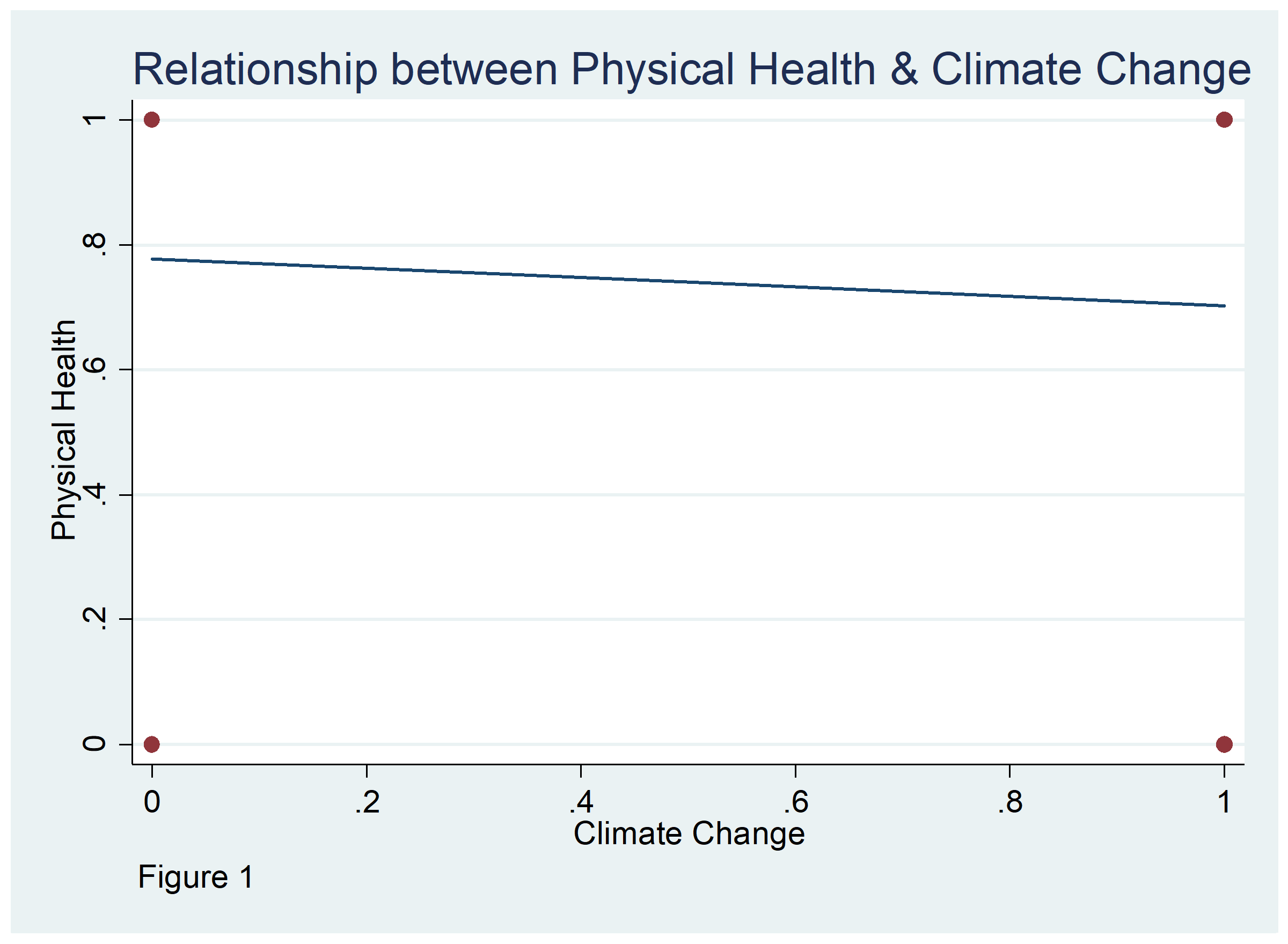
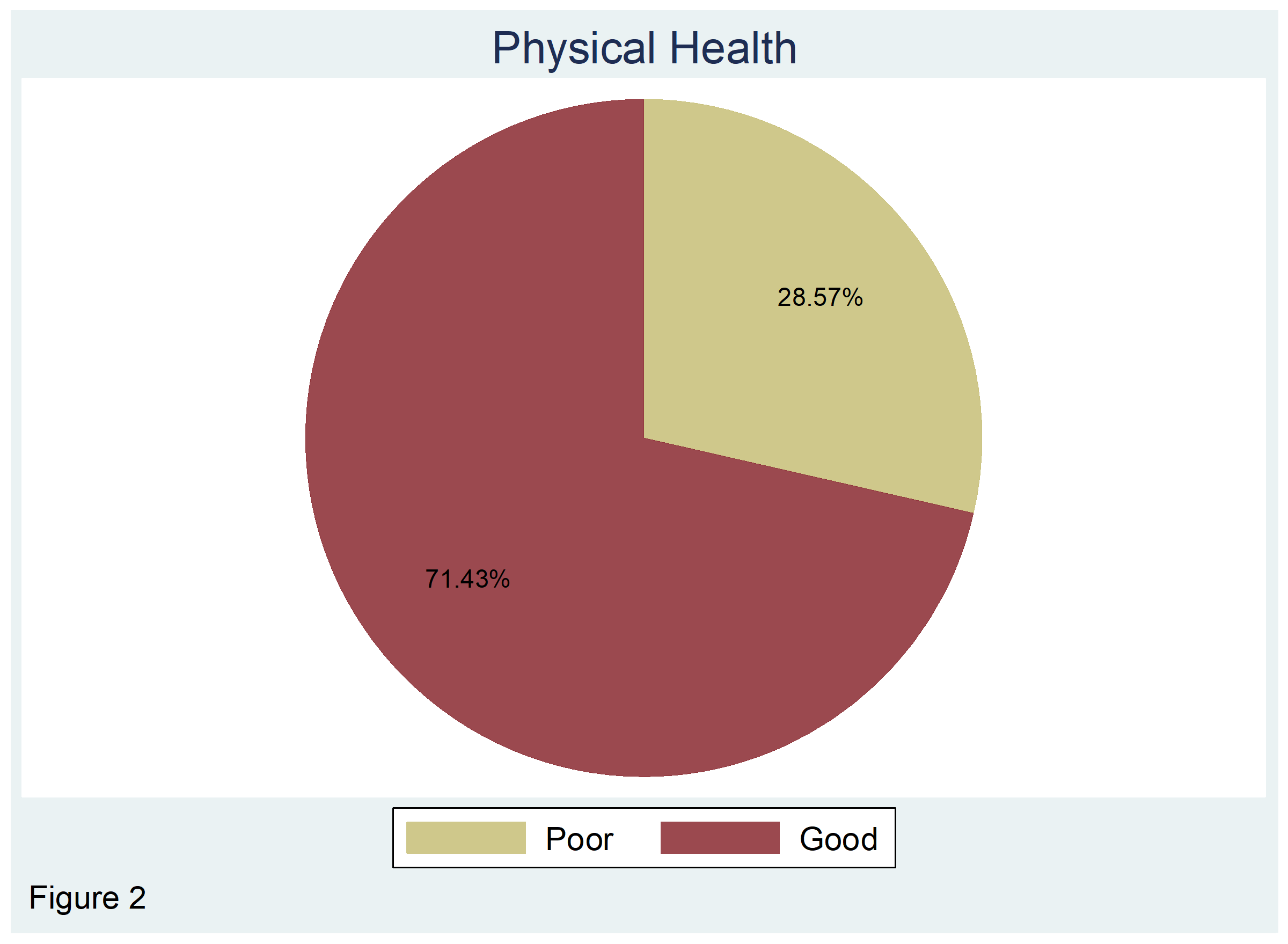
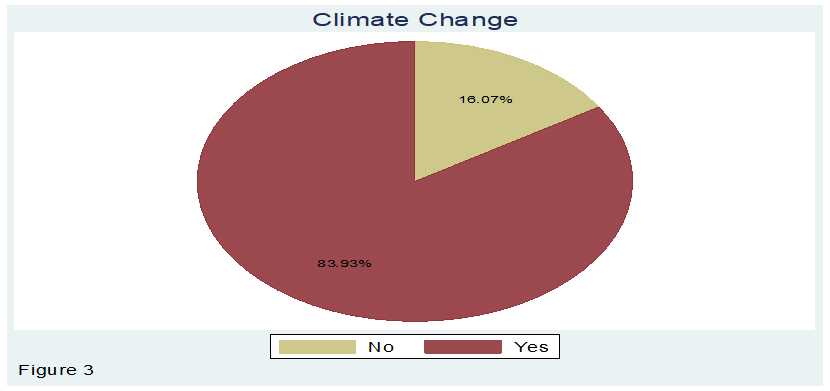
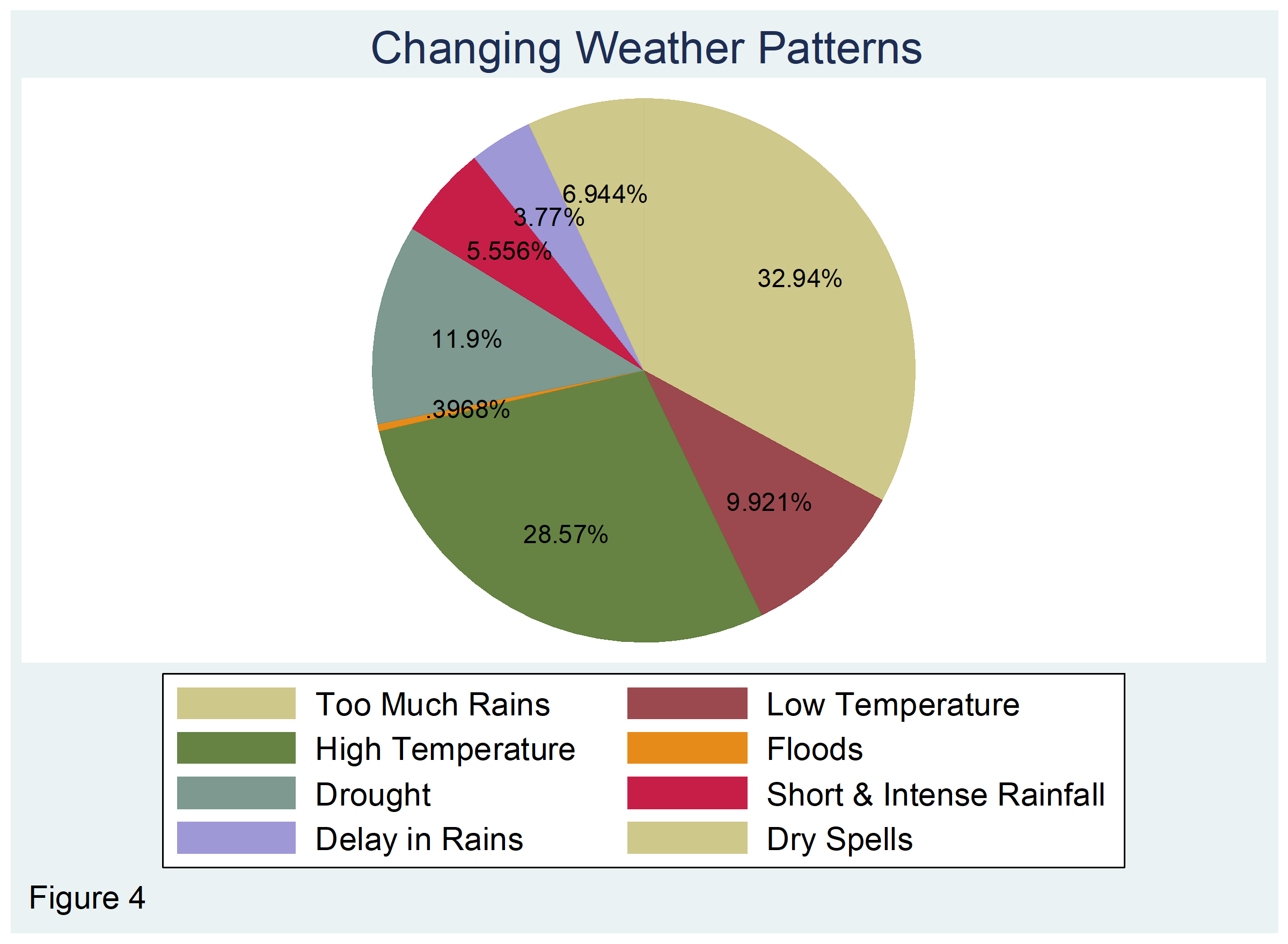
This analysis investigates the prevalence of health effects of climate change on married women, aged between 16 to 65 years and more, of District Rawalpindi.
Descriptive Analysis
Descriptive analysis of the data reveals that changing climatic and weather conditions deteriorate health of the women. Association between health status of women and climatic conditions are explored through cross tabulation and logistic regressions. Climate changing conditions along with covariates are independent variables. Demographic data: age, husband age, and age gap with husband, socio-economic data: HH income, education, employment status, life events, women empowerment and environmental control variables data is also obtained. These variables are entered into descriptive analysis and in regression models as covariates in statistical analysis.
Characteristics | Frequency | %age | Characteristics | Frequency | %age |
Dependent Variable | Independent Variable | ||||
Physical Health | Changing Pattern of Weather affect your Health | ||||
| Good health | 360 | 71.43 | Yes | 423 | 83.93 |
| Poor health | 144 | 28.57 | No | 43 | 8.53 |
| Don't Know | 38 | 7.54 | |||
Demographic Variables | |||||
| HH Income | Marital Status | ||||
| No Income | 5 | 0.99 | Married | 461 | 91.47 |
| >10000 | 61 | 12.10 | Widowed | 0 | 0 |
| 11000-25000 | 199 | 39.48 | Divorced | 22 | 4.37 |
| 26000-50000 | 125 | 24.80 | Separated | 21 | 4.17 |
| 51000-75000 | 77 | 15.28 | Socio-Economic Variables | ||
| 76000-100000 | 15 | 2.98 | Life Events (Enough food for three meals a day) | ||
| <100000 | 22 | 4.37 | Dissatisfied | 5 | 0.99 |
| Gender of HH | Uncertain | 20 | 3.97 | ||
| Male | 450 | 89.29 | Neutral | 37 | 7.34 |
| Female | 54 | 10.71 | Satisfied | 153 | 30.36 |
| Age | Very Satisfied | 289 | 57.34 | ||
| 18-25 | 73 | 14.48 | Women Empowerment 2 (Own health care decision) | ||
| 26-35 | 201 | 39.88 | Wife Dominance | 201 | 39.98 |
| 36-50 | 137 | 27.18 | Husband Dominance | 264 | 60.13 |
| <50 | 93 | 18.45 | |||
Environmental Variables | Employment Status of Respondents | ||||
| Housing Ventilation | Government employee | 195 | 38.69 | ||
| Yes | 456 | 90.48 | Private employee | 72 | 14.29 |
| No | 48 | 9.52 | Self employed | 135 | 26.79 |
| Disturbance from Surroundings | Housewife | 102 | 20.24 | ||
| a) Smoke | Level of Education (Husband) | ||||
| A lot | 267 | 52.98 | Illiterate | 17 | 3.37 |
| A little | 125 | 24.80 | Primary | 4 | 0.79 |
| Not very much | 69 | 13.69 | Middle | 91 | 18.06 |
| Not at all | 43 | 8.53 | Matric | 137 | 27.18 |
| b) Noise | Intermediate | 95 | 18.85 | ||
| A lot | 243 | 48.21 | BA/BSc | 95 | 18.85 |
| A little | 172 | 34.13 | MA/MSc | 45 | 8.93 |
| Not very much | 74 | 14.68 | M. Phil | 4 | 0.79 |
| Not at all | 15 | 2.98 | PhD | 16 | 3.17 |
| c) Pollution | Environmental Variables | ||||
| A lot | 266 | 52.78 | Weather Conditions | ||
| A little | 75 | 14.88 | Too much rains | 166 | 32.94 |
| Not very much | 148 | 29.37 | Low Temperature | 50 | 9.92 |
| Not at all | 15 | 2.98 | High Temperature | 144 | 28.57 |
| d) Smell | Floods | 2 | 0.40 | ||
| A lot | 263 | 52.18 | Drought | 60 | 11.90 |
| A little | 50 | 9.92 | Short & Intense Rains | 28 | 5.56 |
| Not very much | 101 | 20.04 | Delay in Rains | 19 | 3.77 |
| Not at all | 90 | 17.86 | Dry Spells | 35 | 6.94 |
The youngest women participant is of 16 years of age at the time of marriage and the eldest one at the time of marriage is of 33 years. Descriptive analysis shows that 71% women report good physical health (see Table 2). In our analysis 84% of women report that they have health problem with changing weather pattern, 53% of which are more vulnerable to bad effects of changing climatic conditions. From these weather patterns, too much rain and high temperature (33% and 29%) affects more women (see Table 2). This may be due to the fact that District Rawalpindi has two extreme weather condition areas (Rainy areas & high temperature areas), 67% women report that they are more vulnerable to these weather changes as compared to men. Women who are more exposed (employed) to outdoor environment are at greater risk (84%) of air pollution as compare to those women having less exposure (16%) to outdoor environment (house wife). Frequency distribution of variables is discussed in Table 2.
To check the empirical association between climate change and women's health status. This study uses logistic regression for physical health this study uses logistics regression. Odd ratios and marginal effects are used to get better picture of our results as coefficient of logistic regression cannot be interpreted. Odd ratio gives us direction of variables and marginal effects explain the magnitude of the model.
| Variables | Odds Ratios | Marginal Effects | ||
| Climate Change | 0.5823* (0.1921) | -0.0955* (0.050) | ||
| Disturbance (pollution) | 1.1273 (0.1299) | 0.0232 (0.022) | ||
| Ventilation | 0.7377 (0.3866) | -0 0573 (0.080) | ||
Table Continued on Next Page | ||||
Table Continued from Previous Page | ||||
| Land area of house | 0.9989 (0.0192) | -0.0002 (0.004) | ||
| Age | 0.5191*** (0.0161) | -0.128*** (0.022) | ||
| HH Income | 1.0830 (0.1015) | -0.00495 (0.034) | ||
| Employment | 0.9380* (0.086) | -0.0393* (0.026) | ||
| Women Empowerment | 0. 6715** (0.0885) | -0.0788** (0.0255) | ||
| Life Events | 0.7349* (0.1032) | -0.0566* (0.0266) | ||
| HH Gender | 1.2838 (0.4321) | 0.0575 (0.0715) | ||
| Observations | 504 | 504 | ||
| Pseudo R2 | 0.0801 | 0.0801 | ||
| Wald Test | ||||
| chi2 (10) | 42.86 | |||
| Prob > chi2 | 0.0000 | |||
| Goodness-of-Fit Test | ||||
| Chi-square | 9.92 | |||
| DF | 6 | |||
| Pr > ChiSq | 0.1279 | |||
*10%, ** 5%, ***1%. Constants are not reported
We also use Wald Test to check the credibility of our covariates in models. In Wald Test we check that set of parameters are simultaneously equal to zero. The null hypothesis of Wald Test is rejected at 0.05% level of significance which suggests that the inclusion of variables is significant (Prob > chi2 = 0.0000). We also check our model specification through Hosmer-Lemeshow goodness of fit test. The null hypothesis of Hosmer-Lemeshow Test states that model is fitted correctly. Higher the value of (Prob > chi2) best the fitted model is. In this study, almost all the models depict the higher probability which shows our model specification is best.
The results of odd ratios in Table 3 show that climate change negatively affects women's health outcomes. Odds of being physically unhealthy will increase by 42% with increase in intensity of changing climatic patterns. Our results are justified with prior expectation that climate change increases the incidence of diseases which affect physical health (Patz & Kvots, 2002; Frumkin, Hess, Luber, Malilay & McGeehin, 2008; Costello, A., Abbas, M., Allen, Ball, Bell, Bellamy & Lee, 2009). In developing countries, extreme weather patterns disproportionally affect vulnerable population and bear burden of illness (McGeehin & Mirabelli, 2001; Patz & Kovats 2002; Haines, 2008).
The results of covariates in Table 3 imply that the pollution has insignificant and negative effect on physical health. Pollution increases the chances of asthma and respiratory diseases. Breathing in polluted air and long-term exposure in such environment is associated with stroke, depression, diabetes, and shorter life-span. Ventilation and land area has negative and insignificant effect on health. Dampness and mould are a cause of inadequate ventilation in a house which causes physical health issues such as asthma, cardio diseases and allergies (Packer, Stewart-Brown & Fowle, 1994; Tiesler, Thiering, Tischer, Lehmann, Schaaf, von Berg & Heinrich, 2015). 21% unhealthy women reported improper ventilation in their homes while 15% pointed out the incidence of bad health. Poor ventilation is sometimes due to small houses constructed on a very limited land area.
Age has inverse and significant relationship with women health. According to WHO (2007), older women are at a greater risk of chronic diseases. As a person becomes aged his health level affects due to lower immune system. Whereas HH income has positive and insignificant association with health. Income fulfils nutrition intakes, more access to consumption of higher quality of goods and services, better housing, and medical care services which have favourable effect on health outcome (Filmer & Pritchett, 1999; Fayissa & Gutema, 2008; Rajkumar & Swaroop, 2008; Babones, 2008; Cingolani, Thomsson & de Crombrugghe, 2015). In the same manner, employment also has negative and significant impact on physical health of women, as women have dual burden both at workplace as well as at home which weakens women and adversely affect their health.
In case of women empowerment, women having less decision power have inverse association with physical health. Less empowered women have negative health consequences, such as deprived health outcome, increased burden of HH chores, no easy access to medical and education facilities and disparities in provision of HH resources (Velkoff & Adlakha 1998; Wallerstein, 2002). This shows that less empowered women with increased husband dominance has less decision-making power which affect their health outcome badly. Our results show that 40% women are less empowered due to decreased decision power in their life while 53% of husbands dominate their wives in decision making process.
While in case of life events, sad events make women suffer in terms of physical health. Similarly, HH head sex/gender has positive effect on physical health outcome. Optimist HH head, either male or female, adds positively in the lives of his family people in terms of taking decisions for them and can make their lives improved and satisfied but pessimist person can increase their stress and have bad effect on their minds.
Estimates of marginal effects portray that with a unit change in climate decreases women's physical health by 9 percentage points. Without any question, changing climate disproportionately affects women's health (WHO, 2014). The results indicate that weather changes become more extreme which affect biological system badly in all continents especially in developing countries (Epstein, 2005, 2007). The climatic changes and weather patterns not only affect biological system but also have deteriorating effect on individuals' health through ripple effect of global warming (Patil & Deepa, 2007; Kvotes & Akhtar, 2008; Hiscock, Asikainen, Tuomisto, Jantunen, Pärjälä & Sabel, 2017).
Robustness
We also perform sensitivity analysis to check whether our results are robust to other determinants of health by adding variables one by one. We include medical facilities, greenery around homes, water quality, sanitation quality and overcrowding as potential determinants of health. Overcrowding has negative and significant effect on physical health outcome. People living with crowded environment are at a higher risk of illness, the major diseases are respiratory infections, hepatitis, tuberculosis and trachoma and others (Baker, M., McNicholas, Garrett, Jones, Stewart, Koberstein, & Lennon, 2000). Lack of medical facilities negatively affect health outcomes of women. Whereas, improved water and sanitation quality enhances health outcome, as safe and clean water, hand washing facilities, proper toilets and hygiene practices are crucial for improved individuals' health outcomes (Moe & Rheingans, 2006). The indicator of greenery has positive and significant effect on physical health. Living in natural beauty improves our quality of life and provides pollution free environment (Pretty, Peacock, Sellens, & Griffin, 2005). Overall results of sensitivity analysis suggest that findings are robust to inclusion of other determinants of health.
Variables | Odds Ratios | Marginal Effects |
| Climate Change | 0.5504* (0.1848) | -0.1013* (0.0502) |
| Overcrowding | 0.7902** (0.0916) | -0.0445** (0.02176) |
| Climate Change | 0.5718* (01892) | -0.0962* (0.0508) |
| Medical Facilities | 0.6307* (0.1813) | -0.0822* (0.0478) |
Table Continued on Next Page | ||
Table Continued from Previous Page | ||
| Climate Change | 0.5117** (0.1709) | -0.1106** (0.0477) |
| Satisfaction with water quality | 2.4622*** (0.6352) | 0.1722*** (0.0492) |
| Climate Change | 0.6332* (0.2070) | -0.0802* (0.0523) |
| Sanitation (Sharing Toilet) | 0.9742 (0.0331) | -0.0049 (0.0064) |
| Climate Change | 0.6333* (0.2077) | -0.0801* (0.0525) |
| Greenery around Living areas | 0.8701 (0.2077) | -0.0263 (0.0450) |
| Observations | 504 | 504 |
*10%, ** 5%, ***1%. Control variables are not reported here
Research on health consequences of climate change comprising variability in indoor and outdoor climate and changing weather patterns entail in-depth understanding. This study determines how changing patterns of physical environment affect health status by analyzing survey participants of married women in district Rawalpindi.
Due to climate variability many people suffer from weather and temperature related events, air pollution, water-borne diseases, vector-borne disease and food-borne diseases having imminent effect on their health (Patz & Kvots, 2002; Costello, A., Abbas, M., Allen, Ball, Bell, Bellamy & Lee, 2009). Some climate changing effects on health: increasing morbidity, mortality, malaria, dengue fever, cholera, respiratory issues and other infectious diseases are the result of droughts, heat waves, rains, storms and floods. Similarly, Pakistan also faces heat waves fluctuation during summer (April to September) and extreme rainfall pattern which have sever effect on overall health of individuals (Fareed et al., 2016). And the effect of these climatic conditions is felt by women more acutely. According to Bruce and Susan, "There is evidence of how climate change is associated with an increase in asthma in adolescent girls, a higher risk of acquiring lung cancer and heart disease in mid-life, and heart attacks, strokes, and dementia in older women."
Corresponding to main districts of Pakistan, Rawalpindi District not only lacks vegetation but also experiences high heat waves in some areas of the district that are known as "Urban Heat Island". Urban spread with lack of vegetation causes rise in day and night temperature that is attributed to changing climate patterns. In June 2018, during the summer span in Rawalpindi, night temperature was on average 250C. However, Murree and Kotli Sattian are green neighbor of Rawalpindi and other cities of the District under study experience a bit different climate where on average temperature is moderate during the day time while nights are bit cold in summer even. The results show that climate variability badly affect physical health of women. This may be due to the fact that climate change affects health through infectious diseases, unavailability of food production on land, shortage of water, by contributing biodiversity loss and also loss in ecosystem on which human depends. Heat waves record-breaking estimates of District Rawalpindi show that in April 2006 on average 30.20C, in May 2013 it was 45.50C, likewise in June 2007 it was 460C, July 2012 it was 45.50C and in August and September 2017 was 33.70C was recorded. Previous estimates of record-breaking rainfall over 335 mm in 2001, 219 mm in 2010 and 298 mm in 2014, likewise in Murree 373 mm in 2010, 262 mm 2014. These two weather changing patterns are also evident in Table 2 above which shows that (166/504) women are affected by heavy rain fall while (144/504) feel that high temperature is a reason of their bad health.
The results also assert that climate change and changing weather pattern has adverse effect women health. It is also observed that in developing countries increased warming, high intensity of heatwaves disproportionately affects the vulnerable population who bear burden of physical illness (heat stress, heat stroke, mental disorders and heat exhaustion) (McGeehin & Mirabelli, 2001; Patz & Kovats 2002; Haines, 2008). These changing climatic patterns in rural areas are worse for women as they have to face double duties at home and in field with spouse to share their burden. On the other hand, in urban areas mostly women are working women (teachers, nurses, private and government employed) and have double burden of workload at home and at work place. This increased exposure of outside environment affects their health badly with changing climatic patterns.
Policy Implication
Our results show that climatic changes (increasing heat intensity, dry spells, unusual rains and others) affect women health badly. We have to improve our climate by offering different policies designed by state. This may include deforestation, plantation in and outside homes and environmental friendly policies like renewable energy that is a shift from coal and oil investing energy projects. Efforts should also be put to increase green areas within urban locality.
So, government should also be prepared to manage sudden environmental changes and take steps to create awareness in people to safeguards themselves from disastrous effects of changing climate. Awareness, preparedness and information cells can be managed through media to provide safe guards. Rising awareness among individuals is an essential way to reduce health associated risks of climate change.
References
- Ahern, M., Kovats, R. S., Wilkinson, P., Few, R., & Matthies, F. (2005). Global health impacts of floods: Epidemiologic evidence. Epidemiologic Reviews, 27(1), 36-46.
- Aw, J., & Kleeman, M. J. (2003). Evaluating the first‐order effect of intraannual temperature variability on urban air pollution. Journal of Geophysical Research: Atmospheres, 108(D12).
- Babones, S. J. (2008). Income inequality and population health: Correlation and causality. Social Science & Medicine, 66(7), 1614-1626.
- Baker, M., McNicholas, A., Garrett, N., Jones, N., Stewart, J., Koberstein, V., & Lennon, D. (2000). Household crowding a major risk factor for epidemic meningococcal disease in Auckland children. The Pediatric infectious disease journal, 19(10), 983-990.
- Barreca, A. I. (2012). Climate change, humidity, and mortality in the United States. Journal of Environmental Economics and Management, 63(1), 19-34.
- Barreca, A., Clay, K., Deschenes, O., Greenstone, M., & Shapiro, J. S. (2016). Adapting to climate change: The remarkable decline in the US temperature-mortality relationship over the twentieth century. Journal of Political Economy, 124(1), 105-159.
- Barton, H., & Grant, M. (2006). A health map for the local human habitat. The Journal for the Royal Society for the Promotion of Health, 126(6), 252-253.
- Beggs, P. J. (2004). Impacts of climate change on aeroallergens: past and future. Clinical & Experimental Allergy, 34(10), 1507-1513.
- Bell, M. L., Goldberg, R., Hogrefe, C., Kinney, P. L., Knowlton, K., Lynn, B., ... & Patz, J. A. (2007). Climate change, ambient ozone, and health in 50 US cities. Climatic Change, 82(1-2), 61-76.
- Bernard, S. M., Samet, J. M., Grambsch, A., Ebi, K. L., & Romieu, I. (2001). The potential impacts of climate variability and change on air pollution-related health effects in the United States. Environmental Health Perspectives, 109(2), 199-209.
- Campbell-Lendrum, D., Bertollini, R., Neira, M., Ebi, K., & McMichael, A. (2009). Health and climate change: A roadmap for applied research. The Lancet, 373(9676), 1663-1665.
- Carlson, P. (2004). The European health divide: a matter of financial or social capital?. Social Science & Medicine, 59(9), 1985-1992.
- Casman, E., Fischhoff, B., Small, M., Dowlatabadi, H., Rose, J., & Morgan, M. G. (2001). Climate change and cryptosporidiosis: a qualitative analysis. Climatic Change, 50(1-2), 219-249.
- Charron, D. F., Thomas, M. K., Waltner-Toews, D., Aramini, J. J., Edge, T., Kent, R. A., ... & Wilson, J. (2004). Vulnerability of waterborne diseases to climate change in Canada: a review. Journal of Toxicology and Environmental Health, Part A, 67(20-22), 1667-1677.
- Cingolani, L., Thomsson, K., & de Crombrugghe, D. (2015). Minding weber more than ever? The impacts of state capacity and bureaucratic autonomy on development goals. World Development, 72, 191-207.
- Constable, J., Guenther, A., Schimel, D. S., & Monson, R. K. (1999). Modelling changes in VOC emission in response to climate change in the continental United States. Global Change Biology, 5(7), 791-806.
- Costello, A., Abbas, M., Allen, A., Ball, S., Bell, S., Bellamy, R., ... & Lee, M. (2009). Managing the health effects of climate change: lancet and University College London Institute for Global Health Commission. The Lancet, 373(9676), 1693-1733.
- Deschênes, O., & Greenstone, M. (2011). Climate change, mortality, and adaptation: Evidence from annual fluctuations in weather in the US. American Economic Journal: Applied Economics, 3(4), 152-85.
- Deschenes, O., & Moretti, E. (2009). Extreme weather events, mortality, and migration. The Review of Economics and Statistics, 91(4), 659-681.
- Deschenes, O., Greenstone, M., & Guryan, J. (2009). Climate change and birth weight. The American Economic Review, 99(2), 211-217.
- Dockery, D. W., & Pope, C. A. (1994). Acute respiratory effects of particulate air pollution. Annual Review of Public Health, 15(1), 107-132.
- Epstein, P. R. (2005). Climate change and human health. New England Journal of Medicine, 353(14), 1433-1436.
- Epstein, P. R. (2007). Guest Editorial: Climate Change: Healthy Solutions. Environmental Health Perspectives, 115(4), A180.
- Epstein, P. R., Mills, E., Frith, K., Linden, E., Thomas, B., & Weireter, R. (2005). Climate change futures: health, ecological and economic dimensions. In Climate change futures: Health, ecological and economic dimensions. Center for Health and the Global Environment.
- Erbsland, M., Ried, W., & Ulrich, V. (1994). Health, health care, and the environment. Econometric evidence from German micro data. ZEW Discussion Papers, No. 94-16
- Fareed, N., Ghaffar, A., & Malik, T. S. (2016). Spatio-temporal extension and spatial analyses of dengue from Rawalpindi, Islamabad and Swat during 2010–2014. Climate, 4(2), 23.
- Fayissa, B., & Gutema, P. (2008). A Health Production Function for Sub-Saharan Africa (SSA) (No. 200808). Middle Tennessee State University, Department of Economics and Finance.
- Ferlander, S., & Mäkinen, I. H. (2009). Social capital, gender and self-rated health. Evidence from the Moscow Health Survey 2004. Social Science & Medicine, 69(9), 1323-1332.
- Filmer, D. and L. Pritchett (1999). The impact of public spending on health: Does money matter? Social Science & Medicine, 49(10), 1309-1323.
- Frumkin, H., Hess, J., Luber, G., Malilay, J., & McGeehin, M. (2008). Climate change: the public health response. American Journal of Public Health, 98(3), 435-445.
- Gasparrini, A., Guo, Y., Hashizume, M., Lavigne, E., Zanobetti, A., Schwartz, J., ... & Leone, M. (2015). Mortality risk attributable to high and low ambient temperature: A multicountry observational study. The Lancet, 386(9991), 369-375.
- Gosling, S. N., Lowe, J. A., McGregor, G. R., Pelling, M., & Malamud, B. D. (2009). Associations between elevated atmospheric temperature and human mortality: A critical review of the literature. Climatic Change, 92(3-4), 299-341.
- Haines, A. (2008). Climate Change and Health. American journal of preventive medicine, 35(5), 411-413.
- Haines, A., & Patz, J. A. (2004). Health effects of climate change. Jama, 291(1), 99-103.
- Haines, A., Kovats, R. S., Campbell-Lendrum, D., & Corvalán, C. (2006). Climate change and human health: impacts, vulnerability and public health. Public Health, 120(7), 585-596.
- Hales, S., De Wet, N., Maindonald, J., & Woodward, A. (2002). Potential effect of population and climate changes on global distribution of dengue fever: an empirical model. The Lancet, 360(9336), 830-834.
- Heise, L. L., Raikes, A., Watts, C. H., & Zwi, A. B. (1994). Violence against women: a neglected public health issue in less developed countries. Social Science & Medicine, 39(9), 1165-1179.
- Hiscock, R., Asikainen, A., Tuomisto, J., Jantunen, M., Pärjälä, E., & Sabel, C. E. (2017). City scale climate change policies: Do they matter for wellbeing?. Preventive Medicine Reports, 6, 265-270.
- Ikeda, T., Yoshitani, J., & Terakawa, A. (2005). Flood management under climatic variability and its future perspective in Japan. Water Science and Technology, 51(5), 133-140.
- Intergovernmental Panel on Climate Change Working Group 3. (2007). Climate change 2007: mitigation: contribution of working group III to the fourth assessment report of the intergovernmental panel on climate change: summary for policymakers and technical summary. Cambridge University Press.
- IPCC (2014). Climate Change 2014: Synthesis Report. Contribution of Working Groups I, II and III to the Fifth Assessment Report of the Intergovernmental Panel on Climate Change [Core Writing Team, R.K. Pachauri and L.A. Meyer (eds.)]. IPCC, Geneva, Switzerland, 151 p. (PDF, 80 pp, 4.6MB).
- IPCC. (2007). Climate Change 2007: Impacts, Adaptation and Vulnerability. Contribution of Working Group II to the Fourth Assessment Report of the Intergovernmental Panel on Climate Change. Available at www.ipcc.ch/ipccreports/ ar4-wg2-htm (last accessed 17 June 2010).
- Knowlton, K., Rosenthal, J. E., Hogrefe, C., Lynn, B., Gaffin, S., Goldberg, R., ... & Kinney, P. L. (2004). Assessing ozone-related health impacts under a changing climate. Environmental Health Perspectives, 1557-1563.
- Knutson, T. R., Tuleya, R. E., & Kurihara, Y. (1998). Simulated increase of hurricane intensities in a CO2-warmed climate. Science, 279(5353), 1018-1021.
- Kovats, R. S., & Hajat, S. (2008). Heat stress and public health: A critical review. Annual Review Public Health, 29, 41-55.
- Kovats, R. S., Campbell-Lendrum, D. H., McMichel, A. J., Woodward, A., & Cox, J. S. H. (2001). Early effects of climate change: do they include changes in vector-borne disease?. Philosophical Transactions of the Royal Society of London B: Biological Sciences, 356(1411), 1057-1068.
- Kovats, S., & Akhtar, R. (2008). Climate, climate change and human health in Asian cities. Environment and Urbanization, 20(1), 165-175.
- Lee, S. J., Steer, P. J., & Filippi, V. (2006). Seasonal patterns and preterm birth: a systematic review of the literature and an analysis in a London‐based cohort. BJOG: An International Journal of Obstetrics & Gynaecology, 113(11), 1280-1288.
- Li, T., Horton, R. M., & Kinney, P. L. (2013). Projections of seasonal patterns in temperature-related deaths for Manhattan, New York. Nature Climate Change, 3(8), 717-721.
- Lippmann, M. (1989). Health effects of ozone a critical review. Japca, 39(5), 672-695.
- Loevinsohn, M. E. (1994). Climatic warming and increased malaria incidence in Rwanda. The Lancet, 343(8899), 714-718.
- Martens, W. J. (1998). Climate change, thermal stress and mortality changes. Social Science & Medicine, 46(3), 331-344.
- McGeehin, M. A., & Mirabelli, M. (2001). The potential impacts of climate variability and change on temperature-related morbidity and mortality in the United States. Environmental health perspectives, 109(Suppl 2), 185.
- McKulka, T. (2009). Women, Gender Equality and Climate Change. World Health Organization.
- McMichael, A. J., Friel, S., Nyong, A., & Corvalan, C. (2008). Global environmental change and health: Impacts, inequalities, and the health sector. BMJ: British Medical Journal, 336(7637), 191.
- Nyqvist, F., Finnäs, F., Jakobsson, G., & Koskinen, S. (2008). The effect of social capital on health: the case of two language groups in Finland. Health & Place, 14(2), 347-360.
- Packer, C. N., Stewart-Brown, S., & Fowle, S. E. (1994). Damp housing and adult health: results from a lifestyle study in Worcester, England. Journal of Epidemiology & Community Health, 48(6), 555-559.
- Patil, R. R., & Deepa, T. M. (2007). Climate change: The challenges for public health preparedness and response-An Indian case study. Indian Journal of Occupational and Environmental Medicine, 11(3), 113–115.
- Patz, J. A., & Kovats, R. S. (2002). Hotspots in climate change and human health. Bmj, 325(7372), 1094-1098.
- Patz, J. A., Campbell-Lendrum, D., Holloway, T., & Foley, J. A. (2005). Impact of regional climate change on human health. Nature, 438(7066), 310-317.
- Patz, J. A., Epstein, P. R., Burke, T. A., & Balbus, J. M. (1996). Global climate change and emerging infectious diseases. Jama, 275(3), 217-223.
- Pretty, J., Peacock, J., Sellens, M., & Griffin, M. (2005). The mental and physical health outcomes of green exercise. International journal of environmental health research, 15(5), 319-337.
- Rajkumar, A. S., & Swaroop, V. (2008). Public spending and outcomes: Does governance matter? Journal of Development Economics, 86(1), 96-111.
- Reiter, P. (1998). Global-warming and vector-borne disease in temperate regions and at high altitude. The Lancet, 351(9105), 839-840.
- Rosenzweig, C. (2011). Responding to climate change in New York State: the climAID integrated assessment for effective climate change adaptation in New York State: final report. New York Academy of Sciences.
- Seinfeld, J. H., & Pandis, S. N. (2016). Atmospheric chemistry and physics: From air pollution to climate change. John Wiley & Sons.
- Sillman, S., & Samson, P. J. (1995). Impact of temperature on oxidant photochemistry in urban, polluted rural and remote environments. Journal of Geophysical Research: Atmospheres, 100(D6), 11497-11508.
- Stott, P. A., Stone, D. A., & Allen, M. R. (2004). Human contribution to the European heatwave of 2003. Nature, 432(7017), 610-614.
- Tanser, F. C., Sharp, B., & Le Sueur, D. (2003). Potential effect of climate change on malaria transmission in Africa. The Lancet, 362(9398), 1792-1798.
- Thurston, G. D., & Ito, K. (1999). Epidemiological studies of ozone exposure effects. Air Pollution and Health, 1, 485-509.
- Tiesler, C. M., Thiering, E., Tischer, C., Lehmann, I., Schaaf, B., von Berg, A., & Heinrich, J. (2015). Exposure to visible mould or dampness at home and sleep problems in children: Results from the LISAplus study. Environmental Research, 137, 357-363.
- Velkoff, V. A., & Adlakha, A. (1998). Women’s’ health in India. U.S. Census Bureau.
- Wallerstein, N. (2002). Empowerment to reduce health disparities. Scandinavian Journal of Public Health, 30(59_suppl), 72-77.
- WHO (2014). Gender, climate change and health. Geneva. Available at: http://www.who.int/globalchange/GenderClimateChangeHealthfinal.pdf.
- WHO. (2007). Women, ageing and health: A framework for action. In Women, ageing and health: A framework for action. World Health Organization.
- Xia, T., Nitschke, M., Zhang, Y., Shah, P., Crabb, S., & Hansen, A. (2015). Traffic-related air pollution and health co-benefits of alternative transport in Adelaide, South Australia. Environment International, 74, 281-290.
Cite this article
-
APA : Ajaz, T., & Majeed, M. T. (2018). Changing Climate Patterns and Women Health: An Empirical Analysis of District Rawalpindi Pakistan. Global Social Sciences Review, III(IV), 320-342. https://doi.org/10.31703/gssr.2018(III-IV).21
-
CHICAGO : Ajaz, Tahseen, and Muhammad Tariq Majeed. 2018. "Changing Climate Patterns and Women Health: An Empirical Analysis of District Rawalpindi Pakistan." Global Social Sciences Review, III (IV): 320-342 doi: 10.31703/gssr.2018(III-IV).21
-
HARVARD : AJAZ, T. & MAJEED, M. T. 2018. Changing Climate Patterns and Women Health: An Empirical Analysis of District Rawalpindi Pakistan. Global Social Sciences Review, III, 320-342.
-
MHRA : Ajaz, Tahseen, and Muhammad Tariq Majeed. 2018. "Changing Climate Patterns and Women Health: An Empirical Analysis of District Rawalpindi Pakistan." Global Social Sciences Review, III: 320-342
-
MLA : Ajaz, Tahseen, and Muhammad Tariq Majeed. "Changing Climate Patterns and Women Health: An Empirical Analysis of District Rawalpindi Pakistan." Global Social Sciences Review, III.IV (2018): 320-342 Print.
-
OXFORD : Ajaz, Tahseen and Majeed, Muhammad Tariq (2018), "Changing Climate Patterns and Women Health: An Empirical Analysis of District Rawalpindi Pakistan", Global Social Sciences Review, III (IV), 320-342
-
TURABIAN : Ajaz, Tahseen, and Muhammad Tariq Majeed. "Changing Climate Patterns and Women Health: An Empirical Analysis of District Rawalpindi Pakistan." Global Social Sciences Review III, no. IV (2018): 320-342. https://doi.org/10.31703/gssr.2018(III-IV).21