
Abstract
This study maps the intellectual structure and thematic evolution of artificial intelligence (AI) in digital marketing through a bibliometric analysis of 827 Scopus-indexed articles (1986-2026). Utilizing Bibliometrix and VOSviewer, performance analysis and science mapping reveal recent, accelerated growth across interdisciplinary outlets. China, the US, and India lead productivity, while Malaysia, Jordan, Australia, and the UK drive international collaboration. Thematic mapping identifies machine learning for commerce and consumer behavior as a dominant motor theme. In contrast, human-centric social media research remains a specialized niche, and generative AI emerges as a fast-growing frontier. Furthermore, co-citation networks expose a three-pillar intellectual foundation rooted in digital transformation, quantitative methodology, and technology adoption behavior. Ultimately, this long-horizon science map highlights strategic opportunities to integrate emerging generative AI and human-centric approaches with established, analytics-driven marketing frameworks.
Keywords
Artificial Intelligence, Digital Marketing, Bibliometric Analysis, Machine Learning, Generative AI
Introduction
A
rtificial intelligence (AI) which includes machine learning, deep learning, natural language processing, and much more data-driven systems, has become more integrated into digital marketing processes, including audience targeting, personalization, campaign automation, social media analytics, e-commerce optimization and customer relationship management. In recent literature, this change is not only a matter of increasing the quality of analytics, but a restructuring of the ways companies generates and provide value in digital platforms with AI-enhanced personalization and engagement at scale. Parallel conceptual work also formalizes AI-enabled marketing as a bundle of capabilities ("what), application domains ("where"), and implementation routes ("how) and supports the perception of AI as an integral part of several marketing decisions, instead of single prediction tasks.
Several bibliometric, and systematic review studies show that the rate of research production at the interface of AI and (digital) marketing has increased dramatically since the mid-to-late 2010, yielding an avalanche of mapping and review papers since around Digital spaces, particularly social media and e-commerce, are found in numerous instances as dominant empirical spaces in larger AI-in-marketing science maps. Simultaneously, a specific sub-literature of AI in digital marketing has solidified, and some of the studies explicitly make digital marketing and artificial intelligence the central themes and form domain-specific thematic clusters.
This rapid growth poses an expedient academic imperative, with the growth in size and variety of publications, it has become more difficult to retain a consistent perspective on the conceptual framework of the field, the intellectual underpinnings of the field, and the new research frontier, particularly with the spillover of terminology between marketing and information systems, computer science, and management. More recent studies have already tried to map AI in (digital) marketing using systematic reviews and bibliometrics, but they differ significantly in terms of the choice of databases, search strategy, time windows, and scope limits, making it challenging to build cumulative knowledge.
Bibliometric analysis with Web of Science and Scopus on various query formulations and time spans has been implemented on the digital-marketing-specific side. An eminent Scopus based systematic review with a bibliometric analysis revealed thematic clusters of AI/ML algorithms, social media, consumer behaviour, e-commerce, digital advertising, and budget optimization. More extensive reviews that are specialised in marketing automation report a high thematic skew on personalization and customer experience, with relatively less emphasis on campaign optimization and brand-related outcomes. Integrative frameworks have also been conceptually oriented syntheses, which elevate such domains as dynamic campaign automation, generative content planning, explainable AI, and ethical governance to strategic priority.
Simultaneously, science-map surveys and systematic reviews of the AI in marketing (vaguely defined) offer critical intellectual background and again and again identify digital-channel themes (e.g. social media text mining, e-WOM, AI-enabled commerce, chatbots/MarTech) as significant clusters in the larger field on the convergence of AI and marketing technologies (MarTech), there is also bibliometric evidence that AI-driven digital marketing research is becoming confused with the issues of technology stacks, adoption, and innovation systems.
Despite this advancement, a continuing limitation throughout the landscape is fragmentation: (a) not all reviews are (yet) AI AND marketing: first and only indirectly digital-marketing-focused, (b) not all reviews are (yet) digital marketing AND AI: first and (possibly) only because of query and database differences, (c) the recent development
However, a clear, reproducible, digitally anchored science- mapping synthesis is still required that (i) sets boundaries of inclusion of the digital-marketing sub field of AI-in-marketing intellectual base, (ii) maps the digital-marketing sub field to its broader AI-in-marketing intellectual base, and (iii) pinpoints emerging themes (especially related to generative AI, explainability, and ethical. This work aims to present an organised, evidence-based mapping of the literature on AI in digital marketing through bibliometric and science-mapping analyses that are intended to reveal the dynamics of growth of the field, concept clusters, and intellectual roots of the field. It is framed so that it can be compared to the existing mapping methodologies deployed in previous studies (e.g. systematic review + bibliometrics and network analyses) and remain sensitive to scope definition problems that can be identified based on variations in existing corpora (Efendioğlu, 2023; Nalbant & Aydin, 2025; Verma et al., 2021)
This research will answer the following research questions, guided by the existing thematic indicators in the previous reviews, in particular, the prevalence of personalization/customer experience and the relative lack of campaign optimisation and brand-equity outcomes, and emerging strategic focus on governance, explainability, and generative content
RQ1 (Descriptive evolution): What have been the changes in the volume and impact of AI-in-digital-marketing research over the years in the number of publications, sources, and patterns of citation?
RQ2 (Conceptual structure): Which conceptual themes (e.g. personalization/CX, social media, e-commerce, advertising, automation) are predominant and how can they be related to each other?
RQ3 (Intellectual structure): How is the backbone of the field co-cited, and how are digital-marketing-specific studies related to general AI-in-marketing foundations and conceptual anchors?
RQ4 (Emergence and frontiers): What seems to be emerging (e.g. generative AI applications, explainable AI, ethical governance, sustainability/MarTech integration), and what are relatively peripheral?
This study makes four main contributions to the literature. The first is that it offers a field map anchored digitally, which streamlines and elucidates the structure of AI-in-digital-marketing research, groups themes to be comparable with previous digital-marketing-based clusters (Ziakis & Vlachopoulou, 2023), and comprehensible using existing marketing taxonomies and conceptual anchor. Second, it is related to the larger AI-in-marketing knowledge base, by explicitly defining the digital-marketing sub-field as it is reflected in reference to popular AI-in-marketing science maps, thus defining what is specifically relevant to the digital marketing field as opposed to the general marketing-AI trends through the lens of digital data
Third, the paper provides areas of under exploitation and imbalance; based on the existing evidence that personalisation and customer experience are the key to automation-centred corpora, it reveals where research interest is highly concentrated versus where it is thinner to help develop a more specific research agenda. Lastly, it gives a future perspective agenda in line with the new frameworks through the involvement of recent integrative models that project the future of automation of campaigns, planning of generative content, explainability, and ethical governance, and finally, it states research opportunities at the crossroads of AI capability development, digital marketing strategy, and governance limitations
Conceptual Foundations
Ai in Digital Marketing
AI in digital marketing is considered as research where AI techniques (e.g. machine learning, deep learning, natural language processing, recommender systems, automation and similar methods of computations) are specifically deployed to facilitate, automate or test marketing choices in digital mediums. This is in line with the influential marketing scholarship that has framed AI as facilitating infrastructure in personalised engagement at all stages of the customer journey and syntheses that have systematised AI-enabled marketing by defining the nature of AI capabilities, where AI capabilities are used, and how AI capabilities are applied in marketing practice
An important boundary condition was taken to prevent confusion in the digital context and digital marketing as a decision domain. A large part of AI research utilises digital data (e-commerce logs, social media posts, clickstreams) as an easy-to-use dataset without considering marketing constructs or marketing goals. Thus, work has only been regarded as conceptually central when placed in the context of marketing activities and marketing results, such as segmentation/targeting, personalisation, campaign optimisation, digital advertising and budget allocation, conversion, retention, customer experience, brand outcomes, or governance issues unique to marketing deployments (Ziakis & Vlachopoulou, 2023). This delimitation is congruent with digital-marketing-oriented reviews that have found recurring thematic clusters associated with marketing practices, specifically social media, consumer behaviour, e-commerce, digital advertising, budget optimisation, and marketing automation streams that are dominated by personalisation and customer experience (Magdalyna & Wibawa, 2025).
Meanwhile, the field has been identified as subsumed by the larger intellectual space of AI in marketing, which has been charted by large-scale systematic reviews and science-mapping studies (Verma et al., 2021; Mustak et al., 2020; Mariani et al., 2021; Labib, 2024). In this regard, the digital marketing lens has been considered a specialised yet overlapping sub-domain, instead of a completely distinct research tradition.
Table 1 Operational definition of "AI in digital marketing" (conceptual boundary)
Component
Included (conceptually central)
Excluded or peripheral (conceptually weak fit)
Interpretation for screening/coding
AI component
AI/ML methods are used to drive marketing decisions, automation, or evaluation (e.g. predictive models for targeting; recommender systems; conversational AI; optimisation for campaign spending).
Purely descriptive analytics without substantive AI; rule-based dashboards presented as "AI" without learning/adaptation.
Inclusion has been supported when AI is substantive, not rhetorical, and linked to marketing objectives (Kumar et al., 2024; Verma et al., 2021).
Digital marketing component
Digital-channel marketing decisions/outcomes: personalisation, customer experience, advertising, budget allocation, e-commerce conversion, CRM/retention, and cross-channel orchestration.
AI studies social media/e-commerce data with no marketing framing, marketing outcome, or link to managerial marketing decisions.
"Digital" has been treated as a channel context, but "marketing" has been required as an explicit decision frame (Ziakis & Vlachopoulou, 2023; Magdalyna & Wibawa, 2025).
Governance layer
Privacy, fairness, transparency, explainability, and ethical governance are tied to marketing deployments and customer interactions.
Generic AI ethics discussions are detached from marketing settings or digital marketing practices.
Governance has been treated as a strategic domain in recent digital marketing syntheses ( Sundari et al., 2025) and as an emerging cluster in broader AI-in-marketing mappings (Labib, 2024).
Conceptual Lenses to Read the Literature
Because bibliometric clusters may be challenging to read out of just the keywords, the conceptual structure has been decoded with a few, highly cited, field-defining lenses. Three complementary perspectives were utilised: (i) marketing-function taxonomies, (ii) strategic capability frameworks, and (iii) technology-stack/ecosystem perspectives. Combined, these lenses have made it possible to translate bibliometric outputs (co-word themes, co-citation clusters, and research fronts) into marketing-relevant constructs.
Taxonomies of marketing functions and activities.
Systematic work has facilitated functional organisation, classifying AI in marketing into specific marketing activity themes and sub-themes, such as integrated digital marketing and content marketing, and listing AI-enabled use cases across marketing functions (Chintalapati & Pandey, 2021). Such a taxonomy is especially effective in separating related yet distinct areas (e.g. consumer analytics vs. campaign optimisation; social listening vs. brand governance), as well as in ensuring that the cluster labels are based on marketing efforts and not in the data-science vocabulary.
Engagement and personalisation are among the primary marketing constructs.
Customer experience and personalisation have been used to organise a large percentage of AI digital marketing literature. This focus is reflective of the conceptual literature on personalised engagement marketing, in which AI has been positioned as an orchestration system to curate choices and personalise interactions across channels (Kumar et al., 2019). A similar focus has been seen in syntheses particular to digital marketing, where personalisation and customer experience have been reported as prevailing themes (Magdalyna and Wibaka, 2025; Ziakis and Vlachopoulou, 2023). Thus, personalization/engagement has been considered a construct of gravity centre to explain clusters and interconnections between them.
Framing of strategic AI augmentation and dynamic capability.
Recent syntheses of digital marketing have progressed beyond tool-based accounts to strategy-based accounts, where AI has been envisioned as a value co-creation driver and as a strategy maker. Specifically, an AI-enhanced marketing framework has been suggested where strategic areas (e.g. personalised engagement, automated campaign dynamicity, content generation planning, explainable AI systems, and ethical AI governance) are clearly separated (Hema Sundari et al., 2025). This lens has been handled as particularly appropriate for the interpretation of newer clusters which may not yet be large in volume but are strategically salient.
AI- Digital-Marketing Convergence and Adoption/Ecosystem Lens
The literature on AI-in-digital-marketing overlaps more with the literature on marketing technologies (MarTech) and innovation systems. Bibliometric evidence has provided some evidence that the AI-MarTech interface creates a consistent thematic space between the adoption, integration, and marketing results (Trojanowski and Barmentloo, 2025). This has been applied to understand clusters which may indicate organizational and infrastructural problems (e.g. marketing automation platforms, CRM stacks, and cross-platform data integration), as opposed to algorithm design per se.
Table 2 Conceptual Lenses Used for Interpretation and Cluster Labelling
Lens
Primary purpose in this study
Typical constructs supported
Key supporting sources
Marketing-function taxonomy
Cluster labeling anchored in marketing activities rather than generic analytics
Integrated digital marketing, content marketing, marketing operations, market research; use-case classification
Chintalapati & Pandey (2021)
Personalized engagement lens
Interpretation of the dominant "personalization/CX" cluster and its spillovers
Personalization, engagement, customer experience, relationship outcomes
Kumar et al. (2019); Magdalyna & Wibawa (2025)
AI-augmented strategic domains
Separation of operational vs strategic themes, including governance and XAI
Dynamic campaign automation, generative content planning, explainable AI, ethical governance
Hema Sundari et al. (2025)
AI-in-marketing intellectual map
Placement of AI-in-digital-marketing as a sub-domain within broader AI-in-marketing research
Foundational themes: sentiments/e-WOM, consumer services, decision-making, ethical marketing
Mustak et al. (2020); Mariani et al. (2021); Verma et al. (2021); Labib (2024)
AI convergence with technology-stack, adoption, and integration clusters Interpretation Clusters of technology-stack, adoption, and integration Clusters of technology-stack, adoption, and integration Clusters of technology-stack, adoption, and integration Clusters of technology-stack, adoption, and integration Clusters of technology-stack, adoption, and integration Clusters of technology-stack, adoption, and integration Clusters of technology-stack, adoption, and integration Clusters of technology
They are chosen based on repeated mentions in the literature review and the ability to offer complementary degrees of abstraction, that is between activity-level taxonomies or strategic areas of governance, and, therefore, to offer more stable reading of bibliometric structures (Hema Sundari et al., 2025; Kumar et al., 2024; Verma et al., 2021)
Proposed integrative coding scheme (to map themes to marketing meaning)
To facilitate the uniform interpretation of science-mapping deliverables, an integrative scheme has been defined, which categorises publications based on three orthogonal scales: marketing decision domain, AI capability type, and strategy/governance domain. The design aligns with (i) AI application functional marketing classifications (Chintalapati & Pandey, 2021), (ii) engagement-based definitions of personalisation (Kumar et al., 2019), and (iii) strategic AI augmentation areas that explicitly cover generative planning and governance (Hema Sundari et al., 2025). It also correlates with the larger science-mapping data that AI-in-marketing concepts use on both technical and behavioural-psychological scales (Mariani et al., 2021; Mustak et al., 2020).
Table 3 Integrative framework for mapping bibliometric clusters to marketing constructs
| Axis | Categories (illustrative, not exhaustive) | Typical indicators in abstracts/keywords | Interpretation (what this axis clarifies) |
| A. Marketing decision domain | Segmentation/targeting; personalization/CX; digital advertising & budget optimization; e-commerce conversion; CRM/retention; brand outcomes | "personalization," "customer experience," "digital advertising," "budget optimization," "e-commerce," "conversion," "churn," "loyalty," "brand equity" | The marketing "problem type" is made explicit, reducing the risk that clusters are labelled purely by method terms (Ziakis & Vlachopoulou, 2023; Magdalyna & Wibawa, 2025). |
| B. AI capability type | Prediction; recommendation; conversational AI; content intelligence; optimization/automation | "machine learning," "deep learning," "NLP," "recommender," "chatbot," "automation," "predictive analytics" | The technical mechanism is separate from the marketing objective, enabling multi-method clusters to be interpreted coherently (Kumar et al., 2024; Verma et al., 2021). |
| C. Strategy and governance domain | Operational automation; dynamic capability/strategy; generative content planning; explainability; ethical governance | "marketing automation," "strategy," "generative AI," "explainable AI," "privacy," "bias," "ethics" | Strategically salient themes are distinguished from operational ones, including governance topics that may appear peripheral in purely keyword-frequency approaches (Hema Sundari et al., 2025; Labib, 2024). |
| D. Technology-stack / ecosystem context (optional overlay) | MarTech/CRM stacks; platforms/marketplaces; social media ecosystems | "MarTech," "CRM," "platform," "cross-platform," "marketplace," "SEO" | Technology integration themes are captured as organizational/ecosystem phenomena rather than being misclassified as a purely methodological cluster (Trojanowski & Barmentloo, 2025). |
The framework has been designed to support two common analytic requirements in bibliometric studies: (i) stable naming of clusters beyond surface-level keywords and (ii) translation of bibliometric patterns into a research agenda framed in marketing decision terms and strategic domains (Chintalapati & Pandey, 2021; Hema Sundari et al., 2025; Kumar et al., 2019).
Summary of the Conceptual Foundation
Overall, the AI-in-digital-marketing literature has been conceptualised as a marketing decision and value-creation domain implemented through AI capabilities in digital channels, with a growing emphasis on strategic augmentation and governance. The interpretive approach adopted here has enabled continuity with prior thematic mappings (Ziakis & Vlachopoulou, 2023; Verma et al., 2021) while accommodating emerging domains emphasised in newer frameworks (Hema Sundari et al., 2025) and in the AI-MarTech convergence discourse (Trojanowski & Barmentloo, 2025). This conceptual grounding is intended to ensure that subsequent bibliometric results are interpreted in a manner that is both methodologically transparent and substantively meaningful for marketing scholars.
Digital-Marketing-Specific Reviews and Bibliometric Baselines
Web of Science and Scopus have been used to carry out digital-marketing-oriented bibliometric analyses, usually done by searching explicitly for the co-occurrence of the terms digital marketing and AI-related terms. As an example, Web of Science-based bibliometric analysis investigated AI and digital marketing over a long period and found that there is a high level of correlation between the keywords of digital marketing and artificial intelligence (Nalbant and Aydin, 2025). A bibliometric search based on a set of keywords containing the word digital marketing, as well as artificially intelligent and machine learning, was used in Scopus-oriented mapping to identify several clusters of topics and collaboration patterns (Efendioğlu, 2023). These designs have been associated with high accuracy but are prone to the under-representation of relevant papers that can be digital-marketing-substantive without the exact phrase of digital marketing in titles/keywords.
The use of complementary strategies has been identified in Scopus-based systematic reviews based on initial general querying of AI and marketing, and subsequent screening by PRISMA to obtain thematically consistent corpora based on digital marketing functions. One of the most eminent syntheses of the literature has identified clusters such as social media, consumer behaviour, e-commerce, digital advertising, and budget optimisation (Ziakis and Vlachopoulou, 2023). More narrow publications have narrowed down to marketing automation and have found a strong prevalence of the theme of personalisation and customer experience, with a relatively lower focus on the optimisation of campaigns and brand equity/loyalty (Magdalyna & Wibawa, 2025). Other conceptual syntheses in recent times have also suggested strategy-level frameworks that explicitly raise generative content planning, explainable AI, and ethical governance as important areas of AI-enhanced marketing (Hema Sundari et al., 2025).
Limitations and Gaps
Digital-marketing-specific literature on AI-in-marketing mapping, several common limitations have been found. First, it has been noted that corpus sensitivity varies materially based on whether search entails explicit search phrases (digital marketing) (Efendioğlu, 2023; Nalbant and Aydin, 2025) or includes broader search results (AI AND marketing) and screening (Ziakis and Vlachopoulou, 2023). Second, imbalances in topics have been reported; personalisation and customer experience have frequently been reported in automation-driven syntheses, whereas campaign optimisation and brand outcomes have been less frequently reported (Magdalyna & Wibaka, 2025). Third, recent conceptual and strategic frameworks have defined emergent opportunities of generative AI, explainable AI, and ethical governance (Hema Sundari et al., 2025; Labib, 2024).
Methods
Research design
The intellectual landscape to synthesise and structure the intersection of artificial intelligence (AI) and digital marketing was used in the form of a bibliometric science-mapping design. The reason behind choosing this design is that bibliometric mapping has been used extensively to describe rapidly developing and conceptually dispersed areas, such as the streams of AI-enabled marketing and digital marketing research (Efendioğlu, 2023; Nalbant and Aydin, 2025), reporting was consistent with modern demands of transparency that are typically operationalized by the PRISMA-like documentation of retrieval and eligibility decisions, even though bibliometric studies tend to be based largely on query-level selection.
Construction of Data Source and Corpus.
The Scopus database was chosen as the central source since it is often involved in bibliometric reviews of AI-marketing and AI-digital-marketing and provides standardised bibliographic metadata that is appropriate to use in science mapping (Efendioğlu, 2023; Thakur and Kushwaha, 2023; Trojanowski and Barmentloo, 2025)
A total of 887 artiles published in the period 1986-2026 were accessed and stored as the analytic corpus. Data were downloaded in a structured bibliographic format (for example, CSV/RIS/BibTeX) that contained (where possible) titles, abstracts, author keywords, indexed keywords, author affiliations, sources, citations, and cited references, where possible.
Table 4 Data source and corpus characteristics (Scopus; 1986-2026)
| Item | Specification (as implemented) | Interpretation for validity and scope |
| Database | Scopus | Cross-study comparability was supported because Scopus has been used in major AImarketing and AI digital marketing mapping studies (Efendioğlu, 2023; Thakur & Kushwaha, 2023; Trojanowski & Barmentloo, 2025; Ziakis & Vlachopoulou, 2023). |
| Time window | 1986-2026 | A long horizon was enabled to capture foundational work as well as recent expansion phases reported across AImarketing mappings (Verma et al., 2021) and digital marketing focused bibliometrics (Nalbant & Aydın, 2025). |
| Final corpus size | 887 documents | Corpus size was considered sufficient for stable network estimation in co-word and co-citation analyses (Aria & Cuccurullo, 2017; van Eck & Waltman, 2010). |
| Unit of analysis | Document-level bibliographic records | Document-level mapping enabled the simultaneous evaluation of performance (production/citations) and structure (networks/themes). |
| Metadata fields | Title, abstract, keywords, authors, affiliations, sources, references (when available) | Rich metadata support triangulation across co-word (conceptual), co-citation (intellectual), and coupling (research-front) analyses (Aria & Cuccurullo, 2017; van Eck & Waltman, 2010). |
Search Strategy and Query Formulation
The query was developed to include publications in which AI techniques (e.g.artificial intelligence, machine learning, deep learning, natural language processing, recommenders' systems, chatbots, and similar terms) were specifically related to digital marketing environments and operations. Reviews that indicated the terminological variability of the topic and the common absence of the specific term digital marketing in otherwise pertinent studies (Ziakis and Vlachopoulou, 2023) and domain-specific bibliometric studies employing high-precision AI digital marketing search terms informed query development (Efendioğlu, 2023).
Because advanced-search strings in Scopus can take the final form of journal-specific queries, the logic of the query was recorded and reported verbatim in an appendix to facilitate reproducibility (Page et al., 2021).
Table 5 Scopus Query Logic and Filters
| Component | Implementation (query logic) | Interpretation |
| Concept A: digital marketing | Terms capturing digital marketing and close variants (e.g., "digital marketing", "online marketing", "internet marketing", "e-marketing") | Recall was protected against lexical variation in how digital marketing is labelled across disciplines (Ziakis & Vlachopoulou, 2023). |
| Concept B: AI methods | Terms capturing AI/ML families and salient applications (e.g., "artificial intelligence", "machine learning", "deep learning", "NLP", "recommender system", "chatbot", "generative AI", "LLM") | Coverage was expanded beyond generic "AI" to reflect method terms commonly used in AI-marketing publications (Kumar et al., 2024; Verma et al., 2021). |
| Search fields | TITLE-ABS-KEY | The use of title/abstract/keywords limited retrieval to substantively indexed content rather than full text, consistent with common bibliometric practice (Aria & Cuccurullo, 2017). |
| Time constraint | 1986-2026 | The full historical window of the study was operationalised at the query time. |
| Exclusions (typical) | Errata/Corrections; non-scholarly items where applicable | Noise reduction was supported to preserve the interpretability of networks and theme extraction. |
If additional Scopus filters are applied (e.g. language, document type), they should be reported explicitly because such filters can materially shift thematic composition and comparability with existing corpora (Efendioğlu, 2023; Ziakis & Vlachopoulou, 2023).
Eligibility Criteria and Screening Procedures
Eligibility criteria were outlined to ensure that the corpus consisted of AI implemented in marketing decision-making in digital channels, as opposed to research that just used digital datasets without marketing framing. This boundary has been emphasised as required in the AI digital marketing literature since generic social media analytics and generic recommender-system research, not based on marketing constructs, are commonplace (Ziakis and Vlachopoulou, 2023). Screening was introduced at two levels:
Query-level inclusion was implemented using Scopus retrieval logic. Metadata-level filtering by screening based on titles/abstracts/keywords conceptual fit (where appropriate), especially in records where the concept of digital marketing was used as a weak contextual signal (as opposed to a domain of decision-making). Where decisions needed to be screened at a level other than query-level filters, PRISMA-style documentation was maintained, facilitating the transparent reporting of inclusion/exclusion decisions (Page et al., 2021).
Table 6 Eligibility rules applied to Scopus records
| Criterion | Included when | Excluded when... | Interpretation |
| AI centrality | AI/ML methods were described as a core method or system component | AI was only mentioned rhetorically without methodological substance | The risk of "AI-washing" was reduced, improving construct validity of the AI dimension (Kumar et al., 2024; Verma et al., 2021). |
| Marketing decision relevance | A marketing objective/decision was evident (e.g., targeting, personalization, advertising optimization, conversion, retention, brand outcomes) | The study used digital data with no marketing decision/outcome framing | The "digital context ≠ digital marketing" conflation was minimised (Ziakis & Vlachopoulou, 2023). |
| Digital-channel anchoring | The setting involved digital channels/platforms (e.g., social media, e-commerce, online advertising, marketing automation systems) | Offline-only marketing settings were primary and digital channels were absent | The scope was kept consistent with the digital marketing focus of the review. |
| Scholarly document status | Peer-reviewed scholarly documents indexed in Scopus | Corrections/errata and non-scholarly records (where filtered) | Bibliometric interpretability is supported by ensuring stable bibliographic metadata. |
Data Preparation and Normalization
To ensure that trivial lexical variation or metadata artefacts dominated bibliometric networks, data preparation was applied. The records were purged and standardised before the network was built, which is in line with best practice in bibliometric workflows (Aria and Cuccurullo, 2017; van Eck and Waltman, 2010). The following steps were carried out:
Deduplication was performed in cases where duplicates of exports or repeated records were found. Harmonisation of authors and affiliation was done where there were variants (e.g. initials vs. full names; variants of spellings of the institution). Normalisation of keywords was carried out with the help of a thesaurus-like mapping (e.g. merging singular/plural; merging synonyms like e-commerce vs. electronic commerce); merging of acronyms like NLP). The term cleaning was used to eliminate non-informative tokens and clean noise in co-word networks.
The normalisation of keywords was of particular significance since the stability of thematic clusters in co-word analysis may be delicate when it comes to vocabulary fragmentation.
Bibliometrics and Science Mapping Studies.
Two complementary layers of analysis were introduced: performance analysis and science mapping.
Descriptive bibliometrics (performance analysis): Growth and influence patterns were quantified using performance analysis and included annual publication trends, effective and powerful sources (journals/conference outlets), productivity of authors and citation effect, and contributions and collaboration structures of the country/institution. This layer was introduced to give context to future network outcomes and facilitate the comparison with previous AI digital marketing baselines (Efendioğlu, 2023; Nalbant and Aydin, 2025; Ziakis and Vlachopoulou, 2023).
Science Mapping (Network Analyses): The conceptual structure, intellectual structure, and research fronts of the field were identified using science mapping: Co-word analysis was carried out to map conceptual themes in accordance with term co-occurrence. They are normally identified using co-word analysis, which is a standard methodology for identifying thematic structures in scientific areas (Callon et al., 1983). Co-citation analysis has been performed to determine the intellectual foundation and knowledge core that forms the basis of knowledge, which is prevalent in the mapping of AI-based marketing science (Verma et al., 2021). Bibliographic coupling was performed to identify the current research fronts based on common references. Co-authorship analysis was performed to analyse collaboration networks at the author, institution, and country levels.
Temporal Slicing and Thematic Evolution
To evaluate thematic evolution across a multi-decade corpus, the dataset was segmented into interpretable time slices. Time slicing was justified by prior evidence that AI-in-marketing research has experienced pronounced growth phases and thematic shifts over time (Mustak et al., 2020; Verma et al., 2021), as well as by digital-marketing-specific bibliometrics indicating accelerated activity in the post-2015 period (Nalbant & Aydın, 2025; Ziakis & Vlachopoulou, 2023).
Software Environment and Reproducibility
The analyses were carried out on proven bibliometric toolchains: data import, descriptive bibliometrics, and chosen network analyses were performed with the help of the bibliometrix R package (including Biblioshiny interface) (Aria and Cuccurullo, 2017). Bibliometric maps, such as co-occurrence and co-citation networks, were constructed and visualised in VOSviewer (van Eck and Waltman, 2010). The parameter settings (e.g. minimum keyword appearance thresholds, counting mode, normalisation options, clustering modes, etc.) must be presented in a separate appendix as they also affect the network density and granularity of clusters (van Eck & Waltman, 2010).
Results | Bibliometric analysis
Main Information About the Dataset
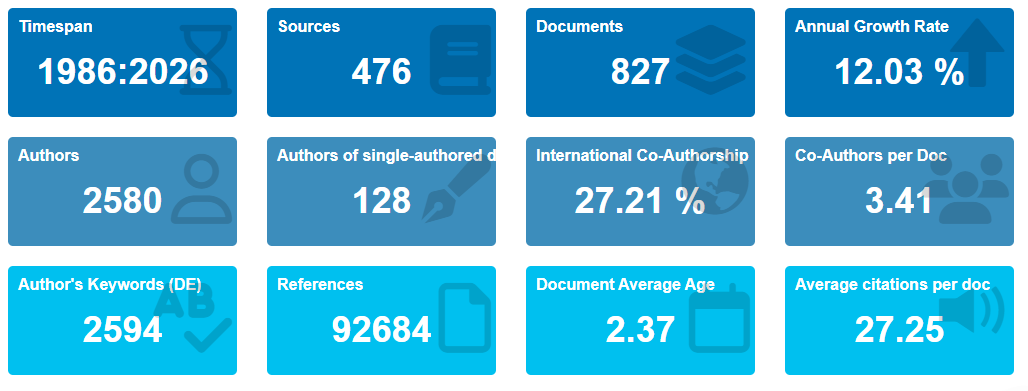
Main Information About the Dataset
Descriptive statistics of the bibliometric dataset (Scopus; 1986-2026)
| Indicator | Value |
| Timespan | 1986-2026 |
| Sources | 476 |
| Documents (articles) | 827 |
| Annual growth rate | 12.03% |
| Average citations per document | 27.25 |
| References | 92,684 |
| Authors | 2,580 |
| Single-authored documents | 136 |
| Co-authors per document | 3.41 |
| International co-authorships | 27.21% |
| Keywords Plus | 2,311 |
| Author keywords | 2,594 |
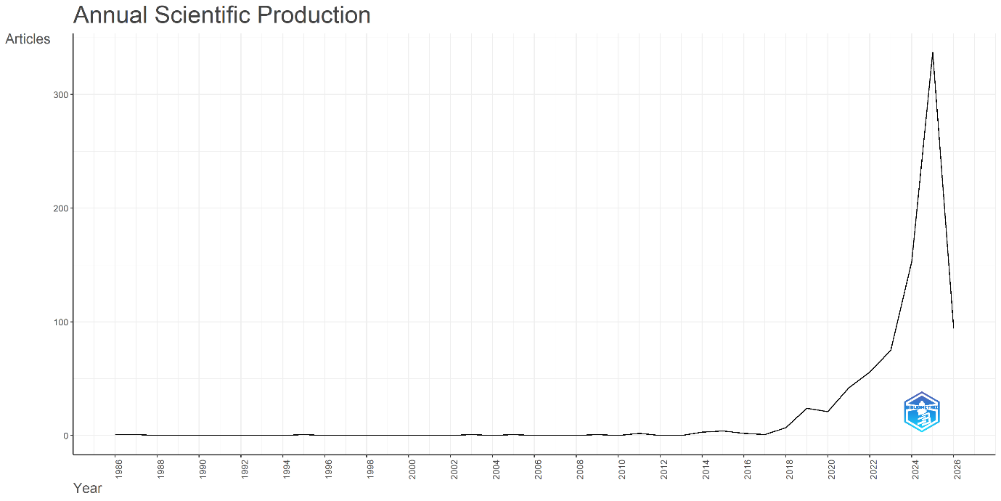
Annual Scientific Production
Scientific production was found to be highly skewed toward the most recent years. The largest annual output occurred in 2025 (337 articles), followed by 2026 (94 articles) and 2024 (153 articles), with substantially lower volumes prior to 2020 (e.g. 2020:21; 2021:42; 2022:56; 2023:75). The sparse early year representation (1986-1995: single instances) indicates that the corpus was dominated by contemporary work rather than long-run accumulation.
Three-Field Plot
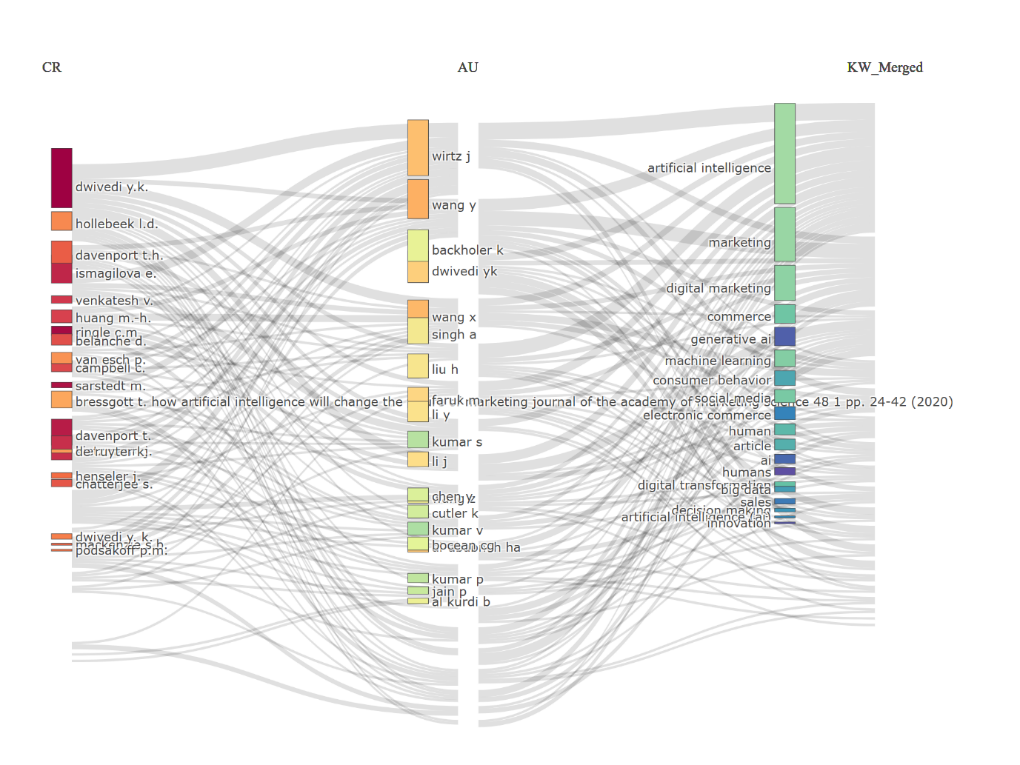
In analysing this Three-Field Plot, we find a cohesive narrative a "flow of ideas" through the existing knowledge contained in the dataset. This flow moves from well-established scholarship to active areas of enquiry and thematic operationalisation (least established), with little overlap between categories. The theoretical foundation is comprised with the works of Dwivedi, Y. K. (first pillar) Hollebeek, L. D., Davenport, T. H., as well as Ringle and Sarstedt for methodology frameworks. This has been the glue between marketing engagement, digital transformation, and hardcore statistical analysis foundation. High productivity can be observed among authors in the top field of research, for example Wirtz, Wang, and Singh, although a metadata artefact (Faruk et al., 2020), specifically a dispersed record, needs to be addressed with caution.
When analysing the field according to its theme, Artificial Intelligence and Marketing intersections are driving this area, but with a huge gap on channels, where social media and e-commerce prevail. Interestingly, Generative AI marks the advent of new paradigms or ideas, while re-emerging terms relating to human aspects indicate an increase in interest toward ethics, trust, and human-AI interaction. Overall, the structural associations represented as thick ribbons linking Dwivedi's foundation work to active authors and popular themes in AI suggest that the field is growing ouofoa concentratetheoreticabasin-specificidigitaled marketing applications.
Top Sources (Most Productive Outlets)
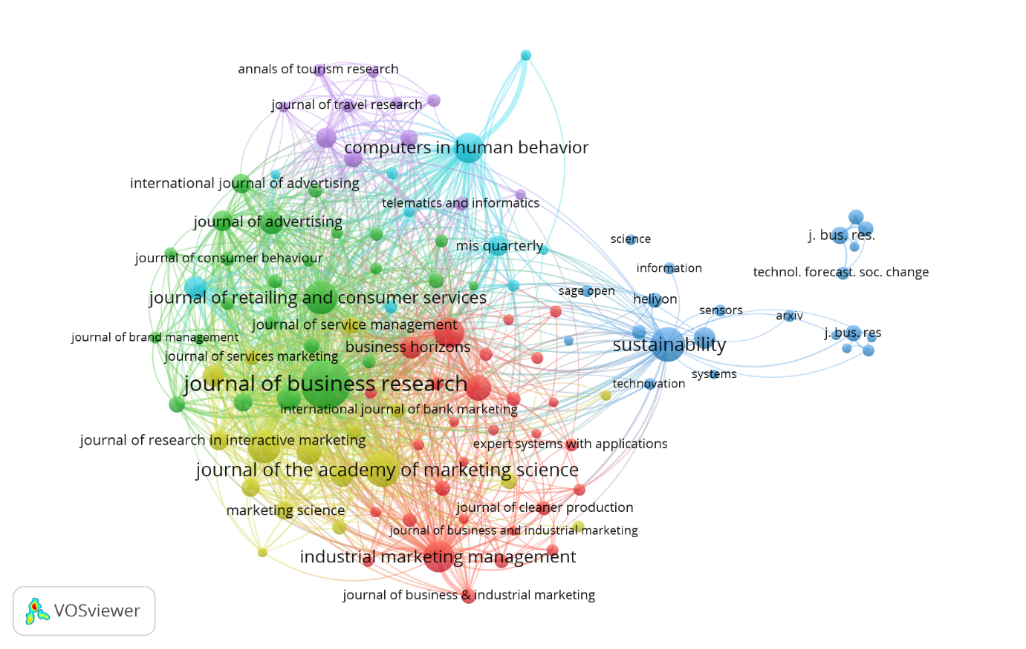
Publication activity is concentrated in a small number of journals, with sustainability- and analytics-oriented outlets appearing prominently. This concentration suggests that AI-digital marketing research has been disseminated through interdisciplinary venues spanning marketing, sustainability, information systems, and technology/forecasting.
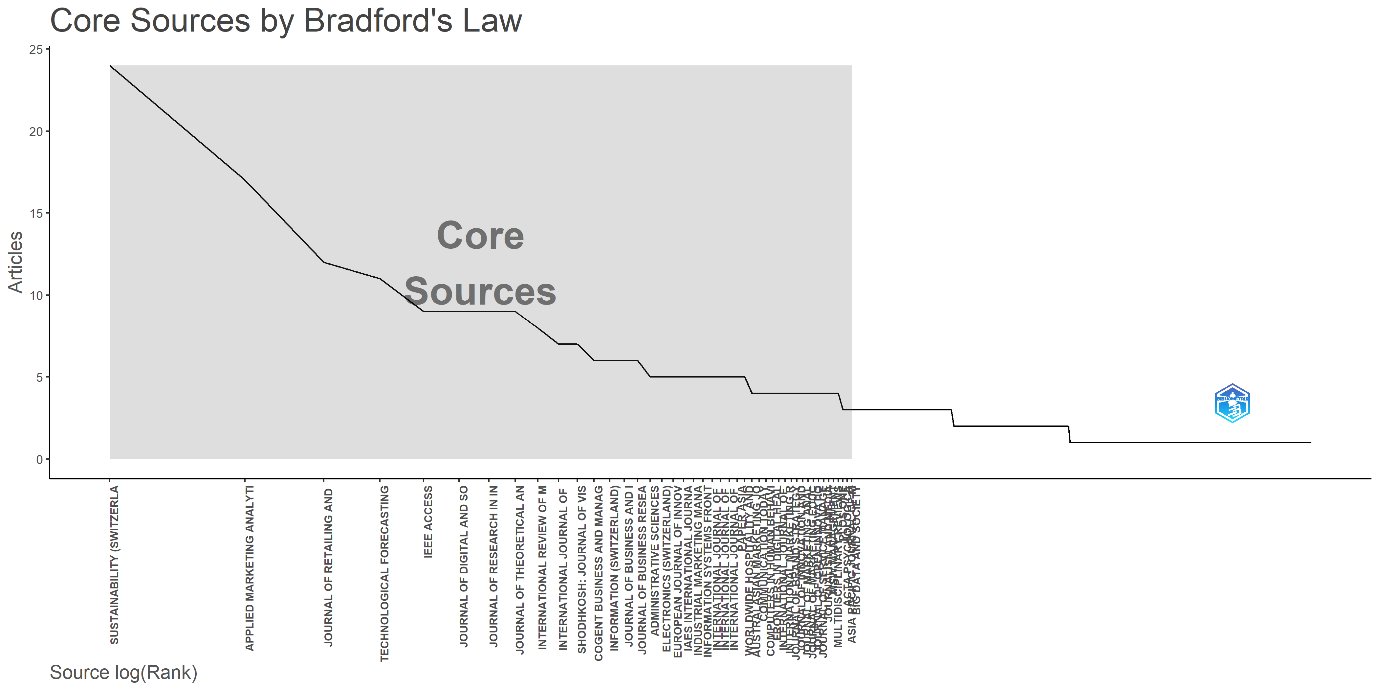
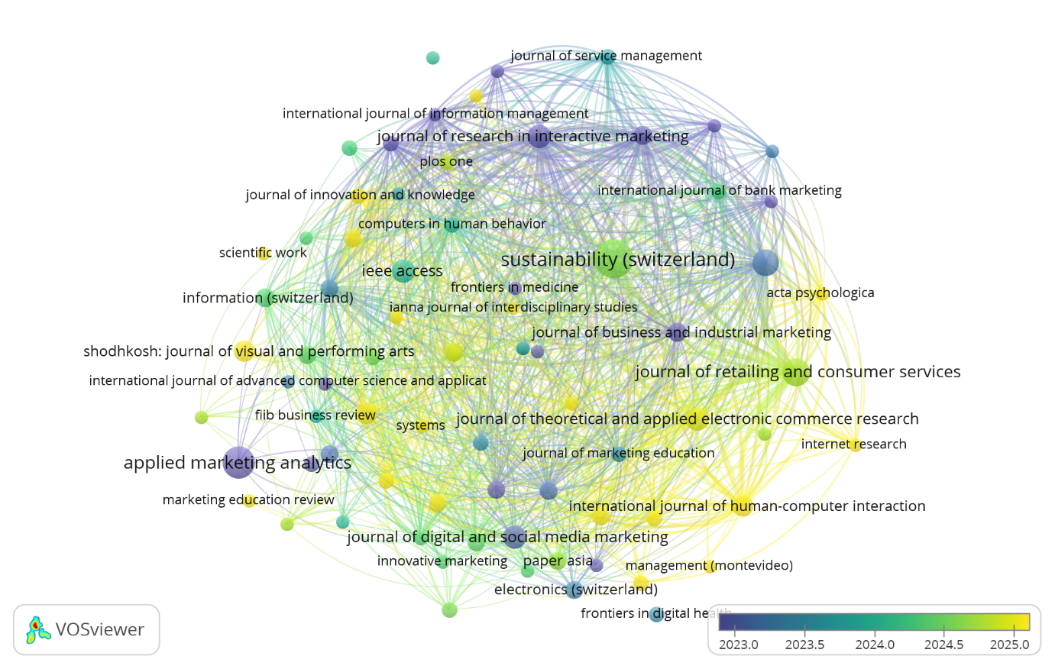
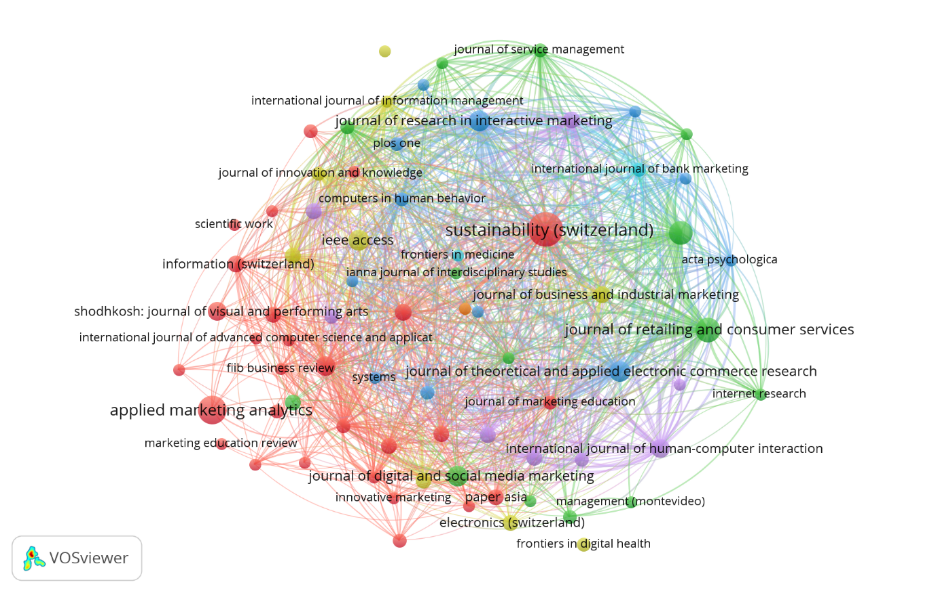
Top Sources by Number of Articles
| Source | Articles |
| Sustainability (Switzerland) | 24 |
| Applied Marketing Analytics | 17 |
| Journal of Retailing and Consumer Services | 12 |
| Technological Forecasting and Social Change | 11 |
| IEEE Access | 9 |
| Journal of Digital and Social Media Marketing | 9 |
| Journal of Research in Interactive Marketing | 9 |
| Journal of Theoretical and Applied Electronic Commerce Research | 9 |
| International Review of Management and Marketing | 8 |
| International Journal of Human-Computer Interaction | 7 |
Top Authors (Productivity and Fractional Contribution)
A small set of authors accounted for the highest number of articles in the dataset. Fractionalised authorship indicated that publication leadership was distributed across collaborative teams rather than concentrated on single-authored work.
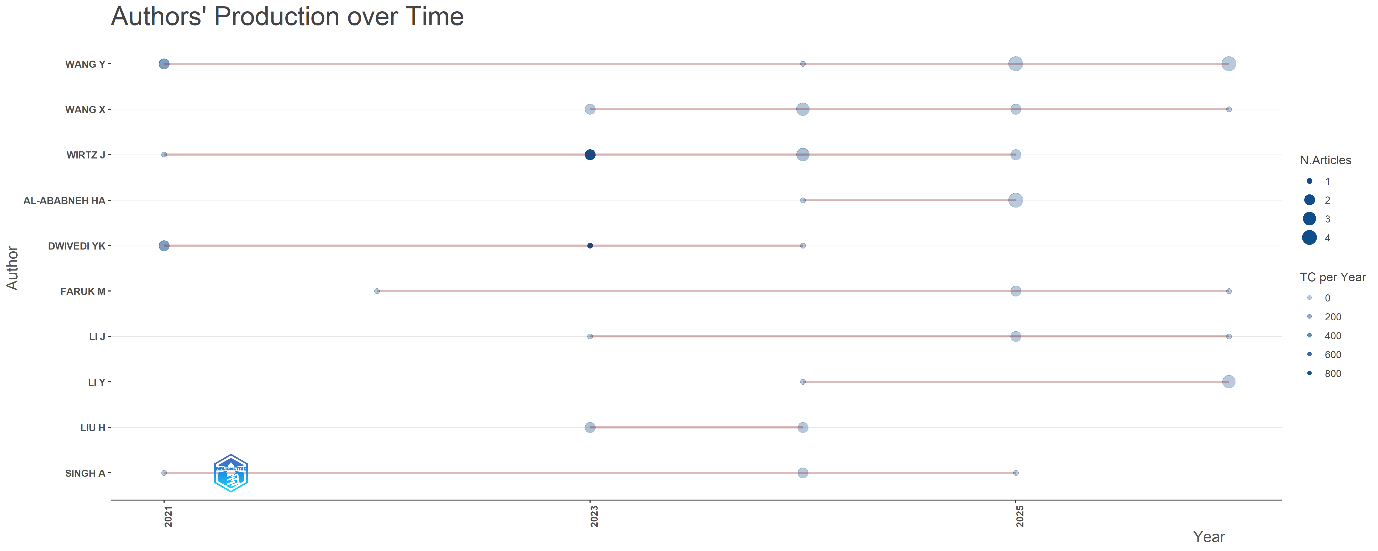
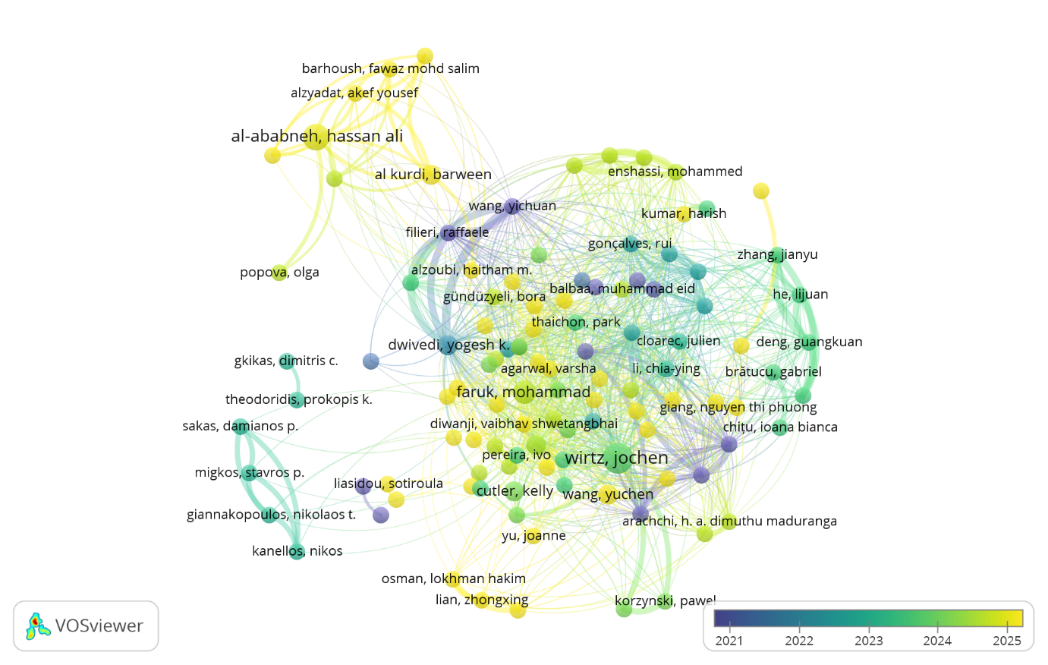
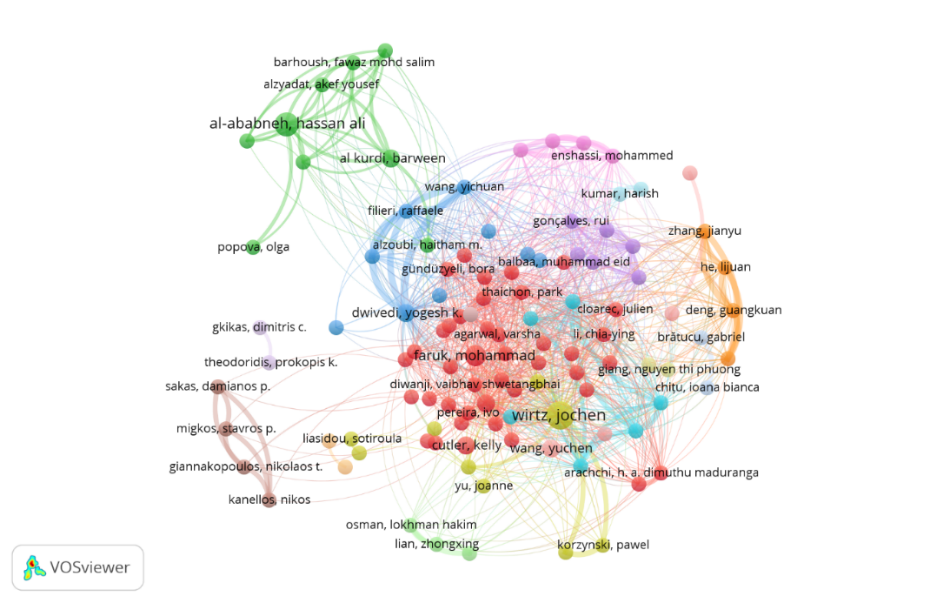
Top authors by number of articles (and fractionalized contribution)
| Author | Articles | Articles (fractionalized) |
| Wang, Y. | 11 | 2.78 |
| Wang, X. | 8 | 2.42 |
| Wirtz, J. | 8 | 1.92 |
| Al-Ababneh, H. A. | 5 | 1.10 |
| Dwivedi, Y. K. | 4 | 0.33 |
| Faruk, M. | 4 | 0.81 |
| Li, J. | 4 | 0.71 |
| Li, Y. | 4 | 1.03 |
| Liu, H. | 4 | 1.45 |
| Singh, A. | 4 | 1.33 |
Top Affiliations (Institutional Concentration)
Institutional contributions were distributed across Asia, Europe, and Australia, reflecting the global diffusion of AIdigital marketing scholarships.
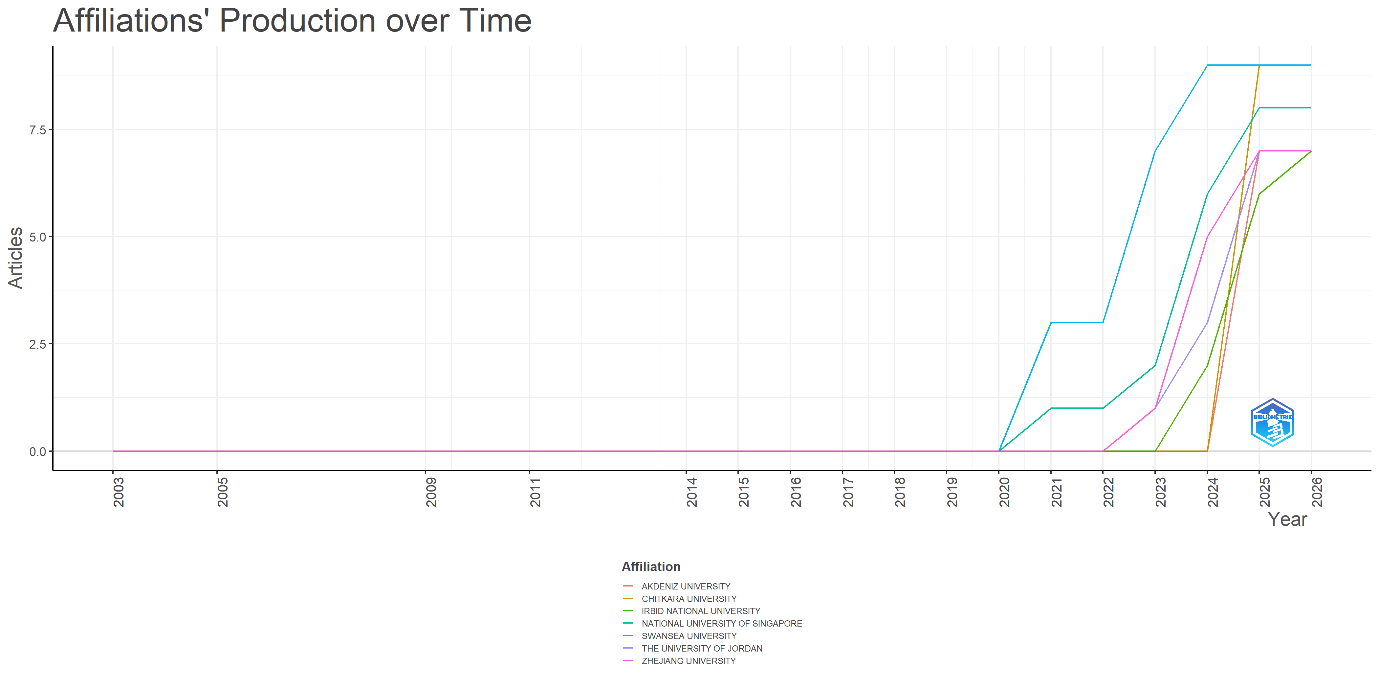
Top Affiliations (Institutional Concentration)
Top affiliations by number of articles
| Affiliation | Articles |
| Chitkara University | 9 |
| Swansea University | 9 |
| National University of Singapore | 8 |
| Akdeniz University | 7 |
| Irbid National University | 7 |
| The University of Jordan | 7 |
| Zhejiang University | 7 |
| La Trobe University | 6 |
| Northwestern University | 6 |
| University of Craiova | 6 |
Top Countries by Articles (Corresponding Author) and Collaboration Structure
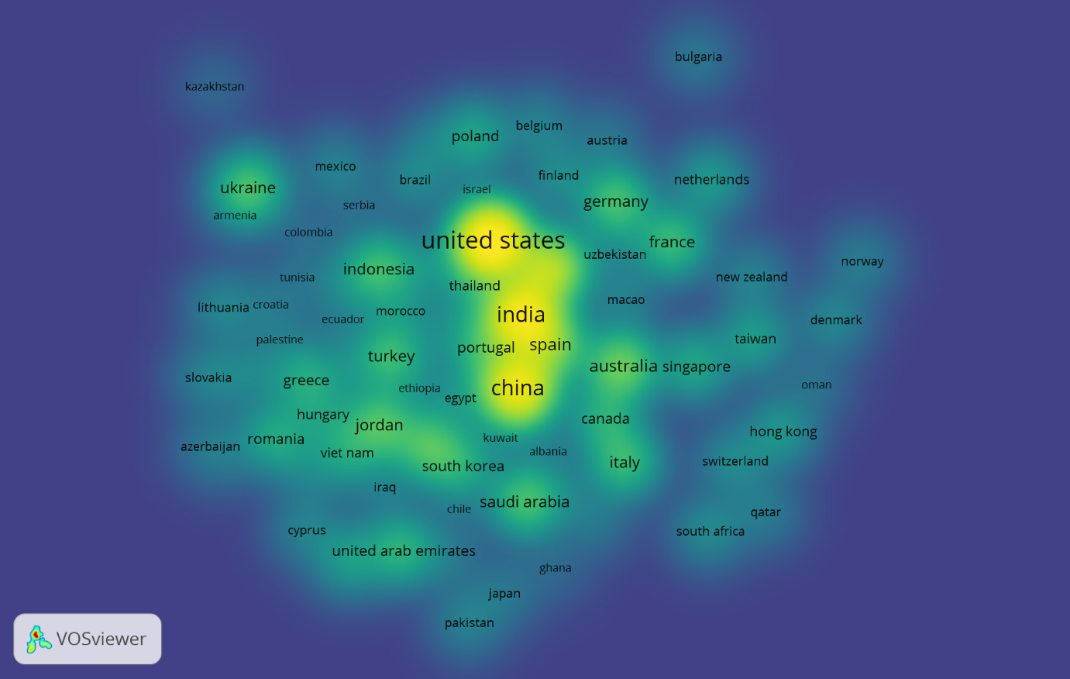
From the corresponding author's perspective, China, the USA, and India were the most productive countries. However, several countries with lower total volumes exhibited substantially higher proportions of internationally co-authored publications (MCP), indicating more globally networked publication strategies.
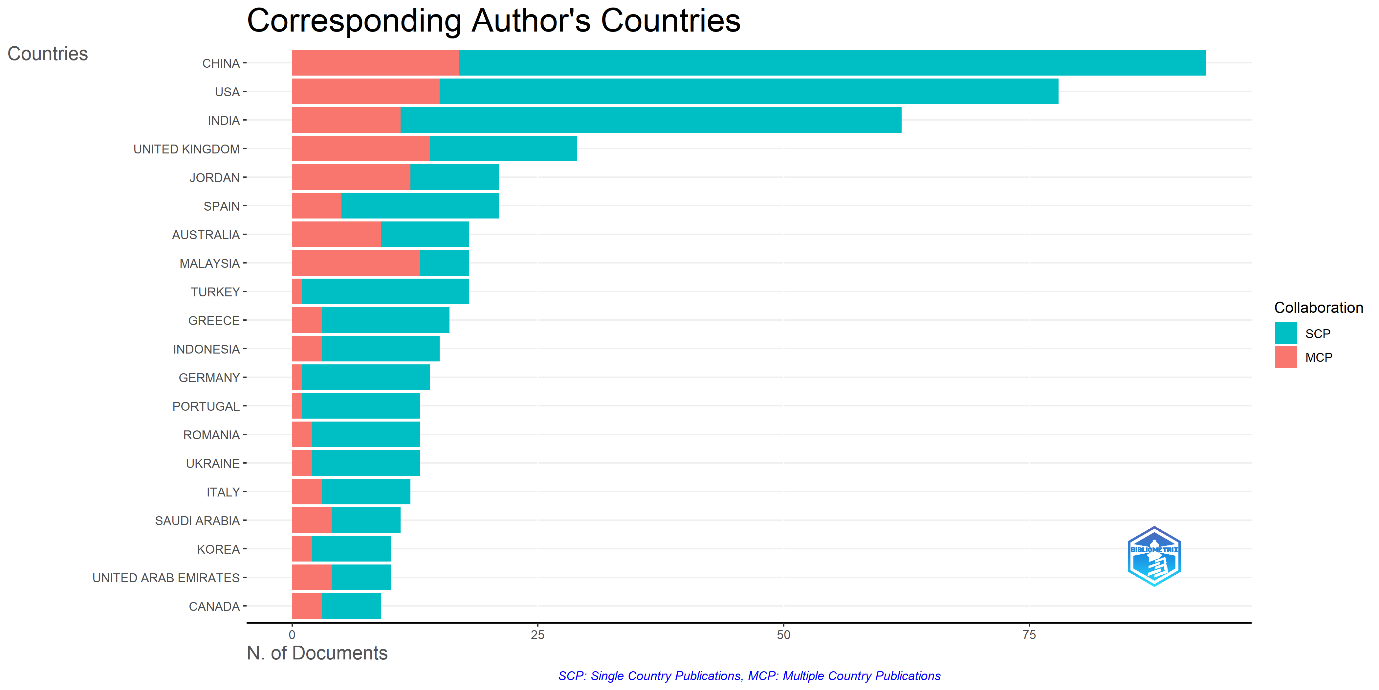
Top Countries by Articles (Corresponding Author) and Collaboration Structure
Top countries by articles
| Country | Articles | Articles % | SCP | MCP | MCP % |
| China | 93 | 11.2 | 76 | 17 | 18.3 |
| USA | 78 | 9.4 | 63 | 15 | 19.2 |
| India | 62 | 7.5 | 51 | 11 | 17.7 |
| United Kingdom | 29 | 3.5 | 15 | 14 | 48.3 |
| Jordan | 21 | 2.5 | 9 | 12 | 57.1 |
| Spain | 21 | 2.5 | 16 | 5 | 23.8 |
| Australia | 18 | 2.2 | 9 | 9 | 50.0 |
| Malaysia | 18 | 2.2 | 5 | 13 | 72.2 |
| Turkey | 18 | 2.2 | 17 | 1 | 5.6 |
| Greece | 16 | 1.9 | 13 | 3 | 18.8 |
Interpretation. High-volume countries were characterised by predominantly single-country corresponding authorship (China, USA, India), whereas Malaysia, Jordan, Australia, and the UK showed substantially higher MCP ratios, indicating a stronger reliance on international co-authorship for corresponding-author output.
Top Countries by Citations (Impact Profile)
Citation impact was not strictly aligned with the publication volume. Countries such as Finland and the United Kingdom have exhibited high total citations and/or exceptionally high average citations per article.
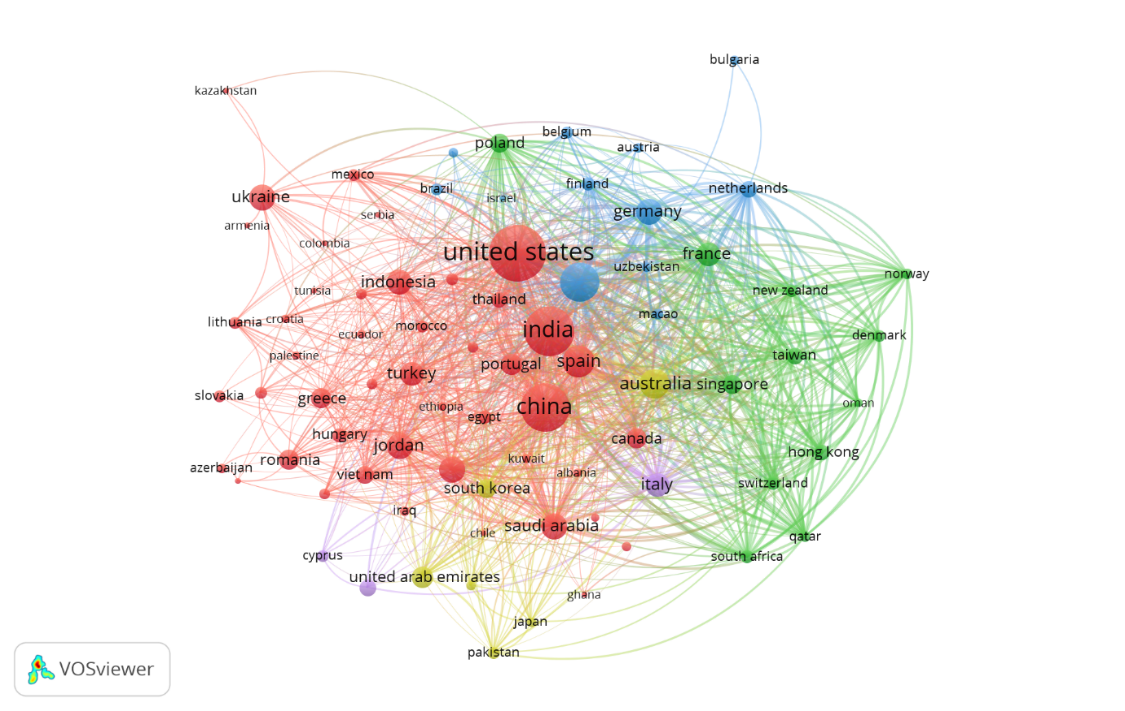
Top Countries by Citations (Impact Profile)
Top countries by total citations (TC) and average citations per article
| Country | Total citations (TC) | Average article citations |
| United Kingdom | 4603 | 158.70 |
| USA | 2674 | 34.30 |
| Finland | 2162 | 308.90 |
| Australia | 1214 | 67.40 |
| India | 1117 | 18.00 |
| China | 929 | 10.00 |
| Spain | 560 | 26.70 |
| Portugal | 545 | 41.90 |
| Italy | 445 | 37.10 |
| Germany | 420 | 30.00 |
Top Documents (Most Cited Within the Dataset)
The most cited documents were concentrated in high-visibility journals (notably the International Journal of Information Management) and were heavily associated with AI-enabled digital transformation, marketing/IS interfaces, and methodological foundations.
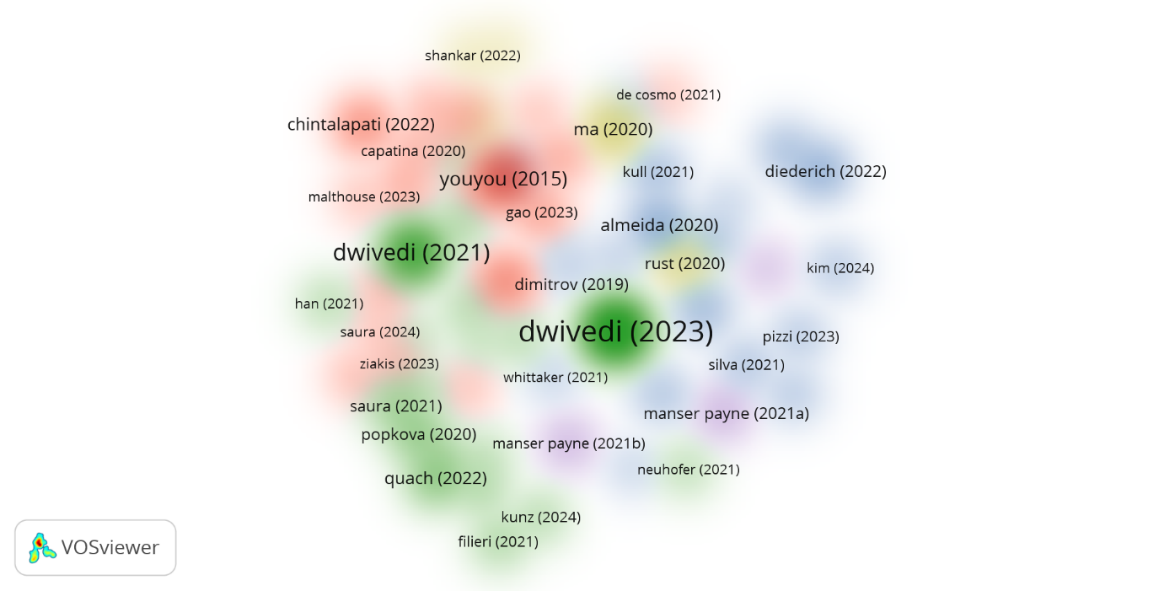
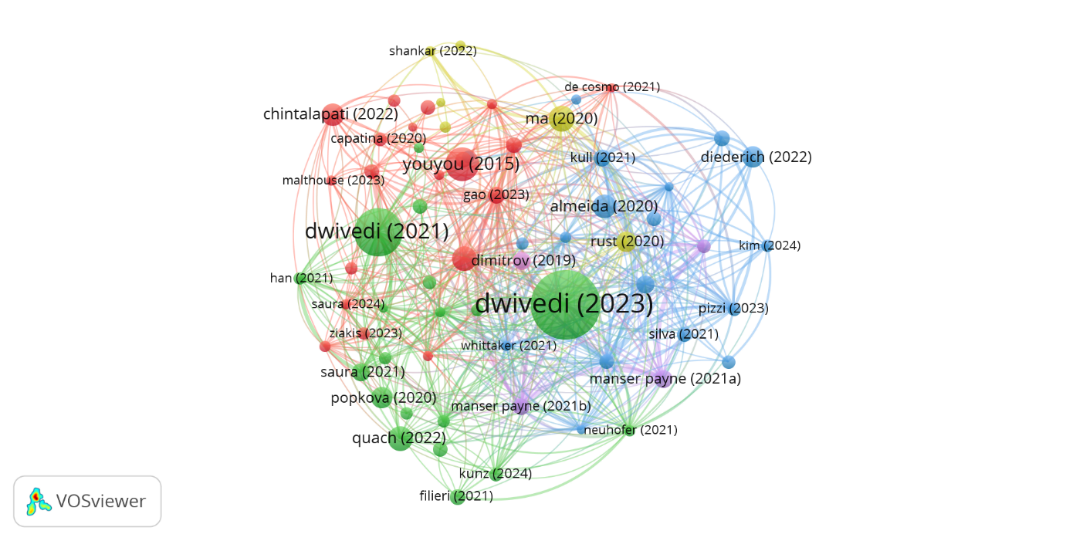
Top Documents (Most Cited Within the Dataset)
Top documents by total citations (as indexed in the dataset)
| Paper (first author, year, source) | DOI | Total citations | TC per year | Normalized TC |
| Dwivedi, 2023, International Journal of Information Management | 10.1016/j.ijinfomgt.2023.102642 | 3333 | 833.25 | 43.29 |
| Dwivedi, 2021, International Journal of Information Management | 10.1016/j.ijinfomgt.2020.102168 | 1617 | 269.50 | 13.84 |
| Youyou, 2015, Proceedings of the National Academy of Sciences | 10.1073/pnas.1418680112 | 796 | 66.33 | 3.70 |
| Ma, 2020, International Journal of Research in Marketing | 10.1016/j.ijresmar.2020.04.005 | 462 | 66.00 | 3.37 |
| Mustak, 2021, Journal of Business Research | 10.1016/j.jbusres.2020.10.044 | 423 | 70.50 | 3.62 |
| Quach, 2022, Journal of the Academy of Marketing Science | 10.1007/s11747-022-00845-y | 415 | 83.00 | 7.87 |
| Almeida, 2020, IEEE Engineering Management Review | 10.1109/EMR.2020.3013206 | 385 | 55.00 | 2.81 |
| Chintalapati, 2022, International Journal of Market Research | 10.1177/14707853211018428 | 337 | 67.40 | 6.39 |
| Popkova, 2020, Journal of Intellectual Capital | 10.1108/JIC-09-2019-0224 | 325 | 46.43 | 2.37 |
| Diederich, 2022, Journal of the Association for Information Systems | 10.17705/1jais.00724 | 316 | 63.20 | 5.99 |
Interpretation of the Word Co-occurrence Network: All Keywords
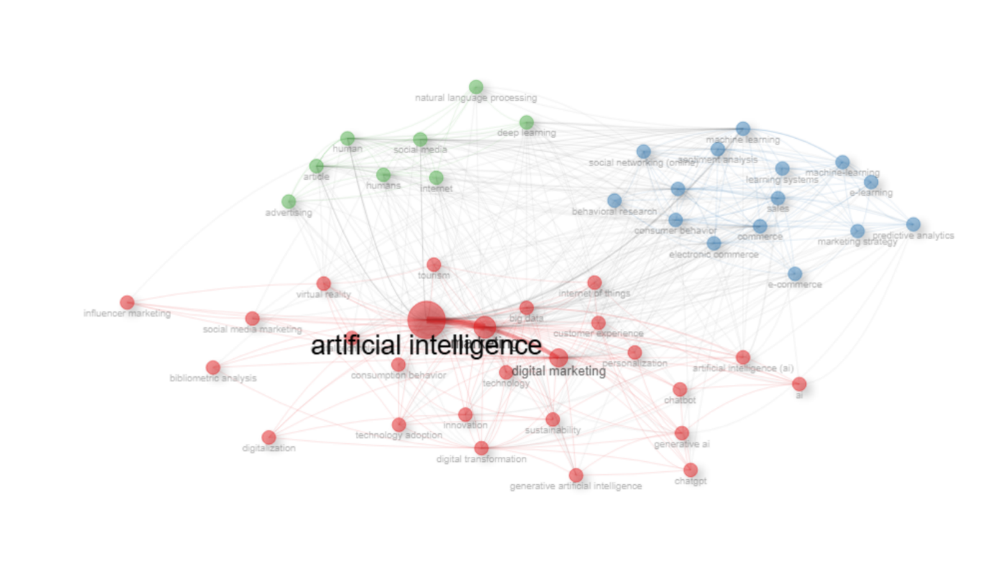
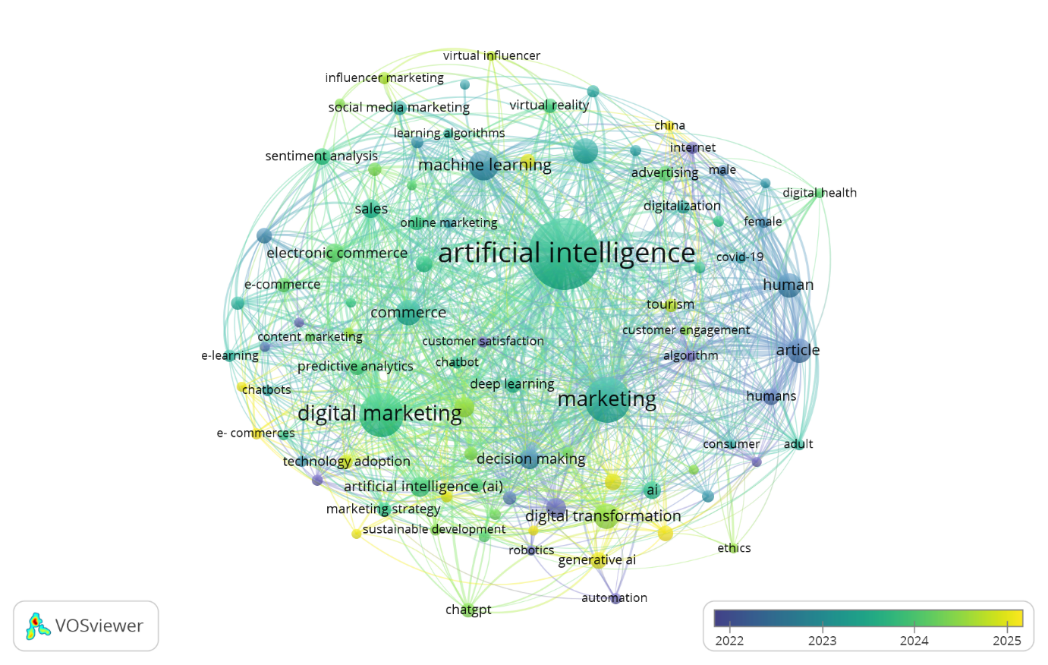
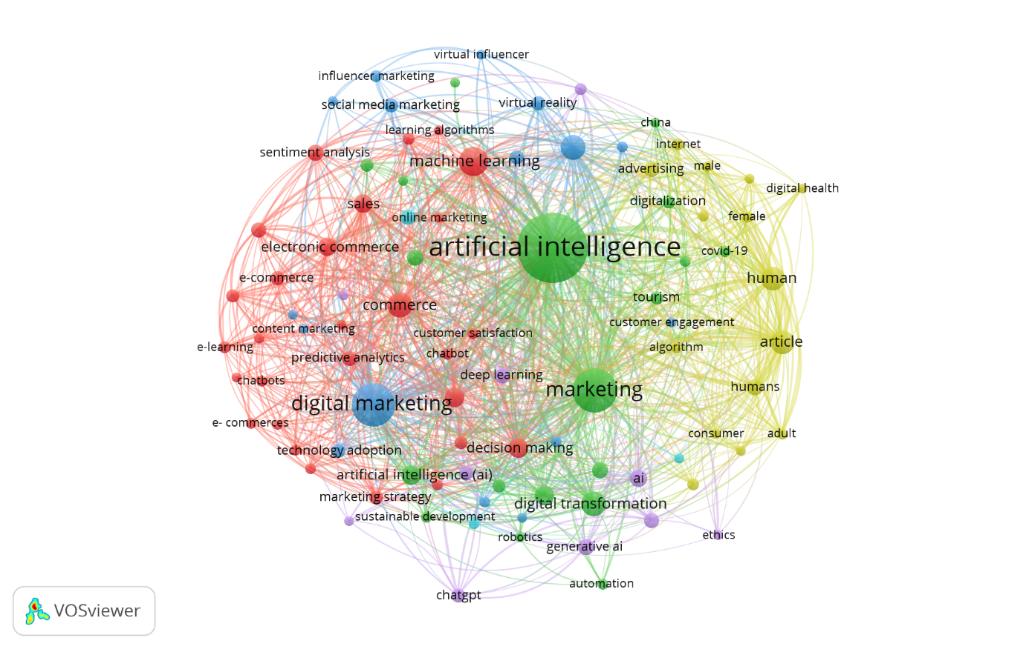
Keyword structure and thematic landscape (co-word analysis)
A co-word (keyword co-occurrence) analysis was conducted using merged keywords (KW_Merged) with a minimum frequency threshold of four and Louvain community detection to identify cohesive thematic communities. The resulting network was observed to be dense and highly interconnected, indicating an active and multi-stream research landscape in which "artificial intelligence" functioned as the dominant hub (largest node) with extensive links to marketing, digital, and consumer-facing concepts. Such density is typically interpreted as evidence that the field is organised around a shared conceptual core while sustaining multiple specialised sub-fronts (Callon et al., 1983; van Eck & Waltman, 2010). Partitioning into multiple communities further suggests that the literature has been simultaneously shaped by application-oriented marketing themes and technique-oriented computational themes (Aria & Cuccurullo, 2017).
Table 14 Keyword co-occurrence clusters (Louvain) and interpretive labels
| Cluster (color) | Representative keywords (as observed) | Interpretive label (field meaning) |
| Red | artificial intelligence, digital marketing, big data, internet of things, customer experience, personalization, social media marketing, influencer marketing, virtual reality, innovation, sustainability, technology adoption, digital transformation, chatbot, ChatGPT, generative AI, tourism | AI in marketing practice, customer experience, and emerging applications (application hub) |
| Blue | machine learning, deep learning, sentiment analysis, predictive analytics, commerce, electronic commerce, e-commerce, sales, marketing strategy, behavioral research, consumer behavior, learning systems, e-learning | Technical AI and analytics for commerce and consumer behavior (method-performance core) |
| Green | natural language processing, social media, advertising, internet, human, humans | Human-centric AI and language/social platforms (interactional and societal focus) |
| Purple | generative AI, generative artificial intelligence, ChatGPT | Generative AI in marketing (nascent, fast-emerging theme) |
Word Cloud and Word Tree (descriptive lexical summaries)
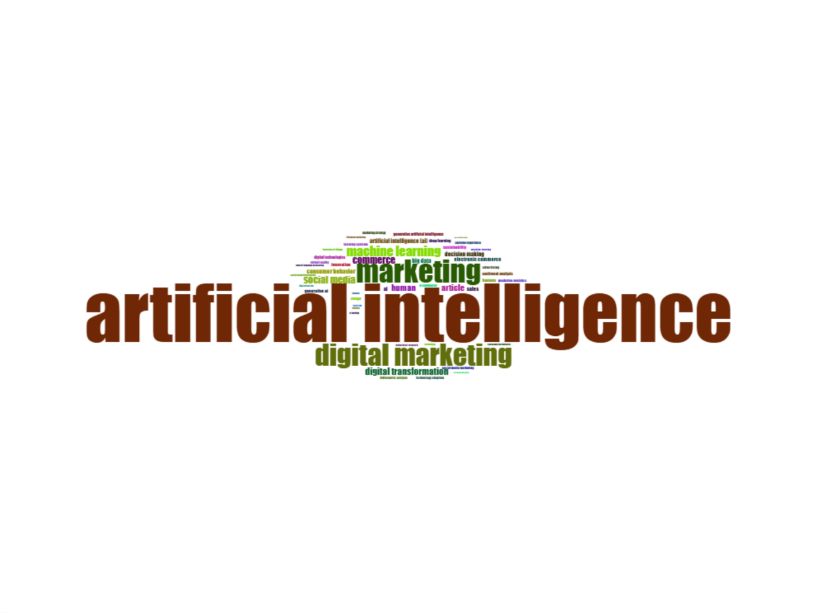
The word cloud, derived from KW_Merged, was dominated by "artificial intelligence" and "marketing", followed by channel- and application-level terms such as digital marketing, commerce/electronic commerce, consumer behaviour, and social media, as well as technique descriptors including machine learning, deep learning, and natural language processing. In interpretive terms, the prominence hierarchy indicated that the corpus has been structured around an AImarketing core with strong digital-channel specialisation and a sustained emphasis on consumer/market behaviour modelling.
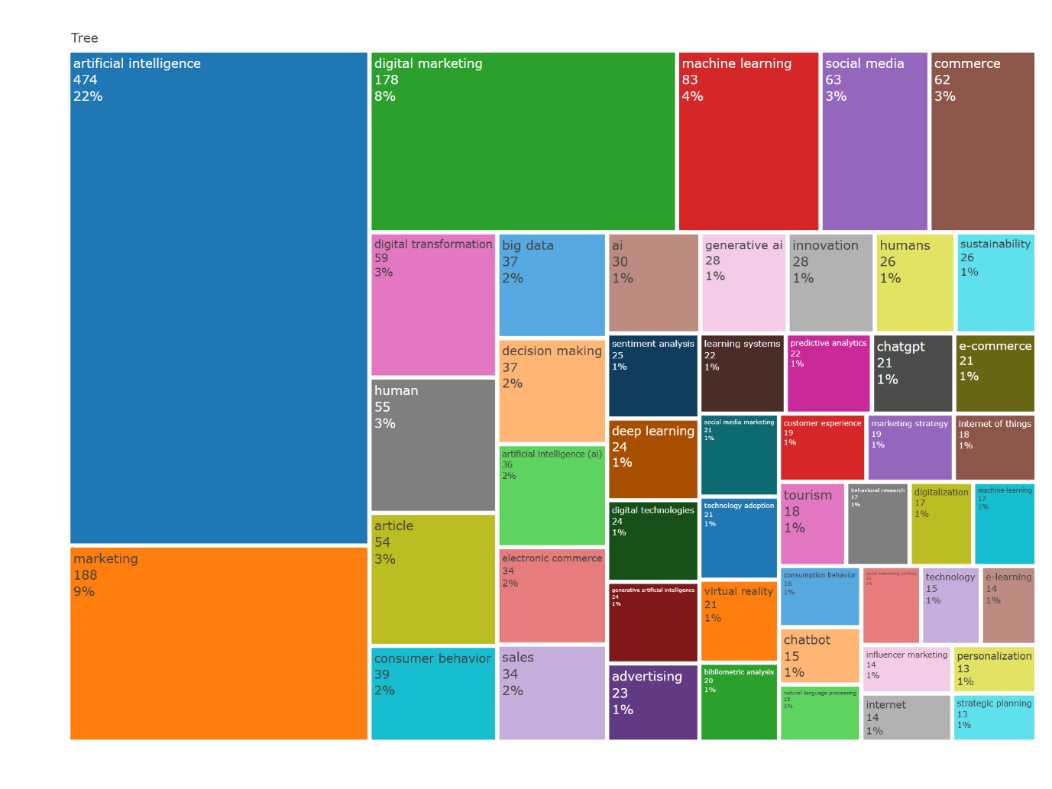
The word tree (keyword tree) showed that artificial intelligence was a root term branching into (a) marketing-facing applications, for example, personalisation, customer experience, digital marketing; (b) data/technology enablers, for example, big data, Internet of things; and newer conversational/generative concepts, for example. chatbot, ChatGPT, generative AI First, the tree structures are primarily used as a descriptive aid rather than inferential evidence for their relatedness; therefore, in this context, the tree can be considered a compact representation of how the dominant vocabulary "fan out" into subtopics in that dataset (Aria & Cuccurullo, 2017).
Thematic Analysis
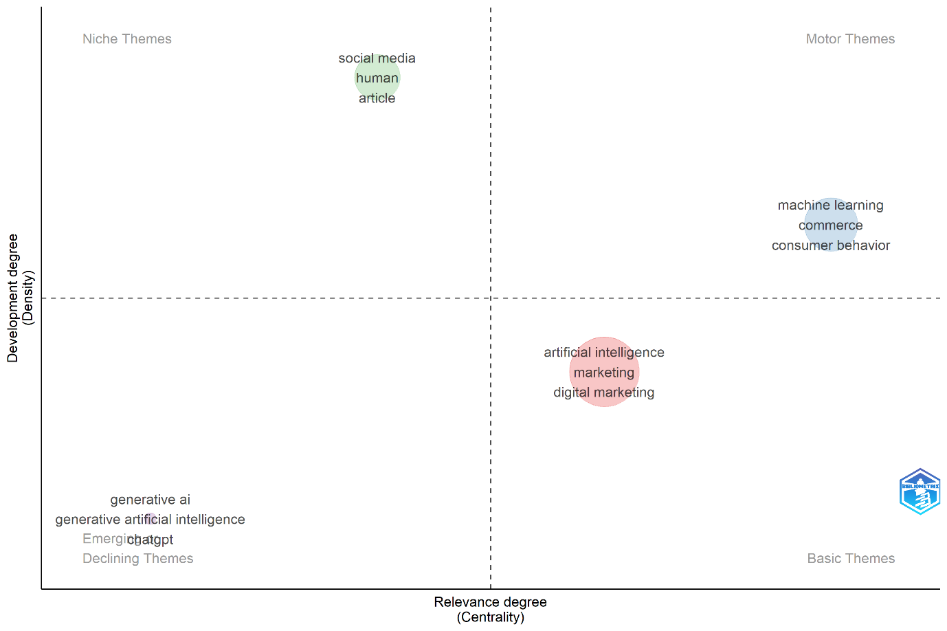
A thematic map was used to classify the clusters based on centrality (relevance to the field) and density (internal development/cohesion). This approach is commonly applied in bibliometric science mapping to distinguish between motor, basic, niche, and emerging/declining themes (Aria and Cuccurullo, 2017; Callon et al., 1983). Based on the positions described for each cluster, the field was characterised by one motor theme, one basic theme, one niche theme, and one emerging theme.
Thematic Analysis
Thematic map interpretation (centrality × density quadrants)
| Quadrant | Cluster label (from analysis) | Theme type | Concise interpretation |
| Upper-right | machine learning - commerce - consumer behavior (Blue) | Motor theme | A mature and field-driving research front combining AI methods with commerce and behavioral outcomes |
| Lower-right | artificial intelligence - marketing - digital marketing (Red) | Basic theme | A highly central but broad theme, interpreted as foundational and multi-approach rather than internally consolidated |
| Upper-left | social media - human - article (Green) | Niche theme | A cohesive but more specialized stream, interpreted as comparatively isolated from the field's main thematic core |
| Lower-left | generative AI - generative artificial intelligence - ChatGPT (Purple) | Emerging theme | A nascent stream with limited cohesion and limited linkage to the broader field, consistent with very recent uptake |
Co-citation Analysis
Cited References
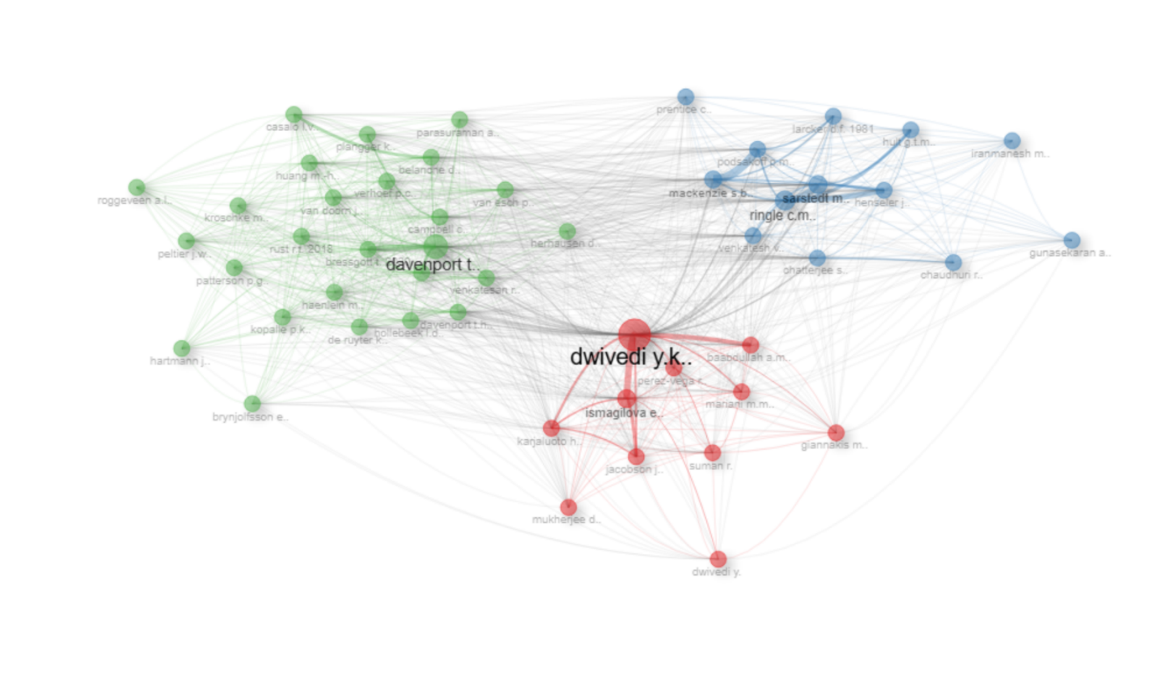
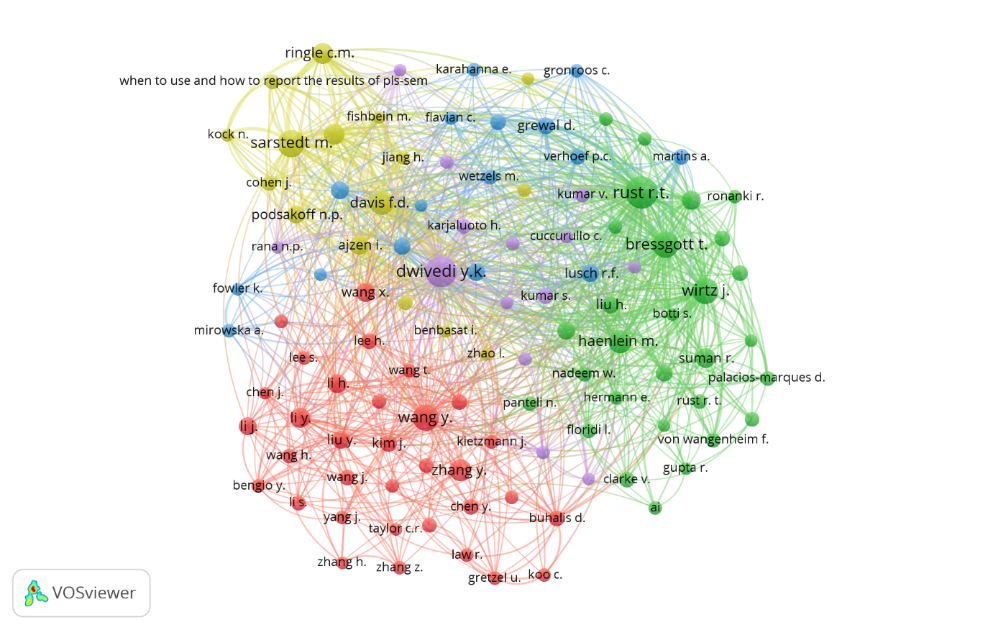
The intellectual dimensions aggregated in the Scopus-indexed body of literature on AI in digital marketing were envisaged through a cited reference co-citation network. We found the network to be moderately dense, suggesting that a common core of foundational references has been repeatedly co-invoked while simultaneously leaving space for multiple specialised sub-streams. In co-citation terms, the size of nodes was taken as relative influence (frequency of co-citation), while edges were interpreted as joint usage patterns rather than direct congruence between conceptually allied works. To reveal cohesive knowledge clusters in large citation networks, community detection was conducted using the Louvain algorithm, which is widely used in bibliometric science mapping (Aria and Cuccurullo, 2017; van Eck and Waltman, 2010).
On the network, a few high-degree nodes operated as intellectual anchors. Specifically, Dwivedi, Y. K. emerged as the most impact-creating integrative node with strong cross-cluster links signifying that (this strand of) work has functioned as a converging reference point across what gets labelled foundational ideas, methodological conventions and modern applications. Davenport also emerged as a dominant anchor in a conceptually grounded cluster, aligned with the growing influence of analytics and digital transformation frameworks shaping AI-enabled marketing scholarship.
Discussion
Interpreting the field's structure beyond descriptive results
The science-mapping evidence showed, instead, that the genre of AI in digital marketing has emerged as a hub-and-spoke topic rather than a singular discipline. The central core of "AI-marketing-digital marketing" is conceptually diffuse, constituting an umbrella topic that early trends and disparate contributions can fall under without internal consolidation (Aria & Cuccurullo 2017; Callon et al. 1983). There is a common central discourse, but no tightly coupled sub-constructs or dominant theories.
In contrast, the theme identified as machine learning-commerce-consumer behaviour is a motor theme (high centrality, high density), indicating that it has developed into a compact centre that interacts with the associated research. This classification is also in line with previous mappings of AI applications within marketing, where consumer behaviour, commerce, and data-driven analytics were specified as key pillars (Mustak et al., 2020; Verma et al., 2021), pointing towards computational approaches that operationalise market behaviour to advance knowledge on AI-enabled digital marketing.
Thus, we identify social media-human as a niche theme that has high density and low centrality: human-centred work is specialised within an AI-marketing hierarchy but weakly integrated on the broader scale. This gap could suggest that the human discourse is based on neighbouring literature (for example, HCI, sociotechnical impact), which is less directly related to marketing design frameworks in relation to AIdigital marketing. This niche cluster might symbolise a theoretical opportunity for a more robust association between human-centric issues (e.g. trust, transparency) and marketing decision domains to enhance integration (Mariani et al.,2021).
Finally, generative AI, ChatGPT, is an emerging theme (low centrality, low density), suggesting that it has not yet attained internal standardisation or stable linkages with established themes. This maps onto recent work which identifies generative AI and governance as strategically prized but unevenly enacted in marketing research (Hema Sundari et al., 2025; Labib, 2024). The dataset captures an early stage of assimilation, where generative AI is part of vocabulary and attention, but not (yet) consolidated around shared practices or frameworks.
Intellectual Foundations: A Three-Pillar Knowledge Base and its Implications
By conducting co-citation analysis, three mutually dependent knowledge pillars emerged, which comprise conceptual and managerial foundations (including AI-enabled marketing) and technology-enabled value creation, where business analytics provides the vocabulary to draw through or frame capability audiences concerning propensity business topics. An emphasis on quantitative measurement and model estimation techniques, with PLS-SEM and sample size recommendations. This dependence on methodological infrastructure suggests that most empirical work uses survey-based designs, model-based designs, or both-helping support comparability, but also potentially biasing the literature toward perceptual outcomes rather than evaluations of causality. A current applications pillar focuses on AI extensions in digital behaviour and adoption, bridging references across conceptions to function empirical applications. Such integrative scholarship is needed to guide synthesis and agenda-setting work in the fast-moving domain, which is common in rapidly moving research fields (Verma et al., 2021). The three-pillar structure describes the breadth of the field (the basic theme) and its deployment under the mature motor theme. We trained on the data until October 2023. Methodological institutionalisation strongly promotes empirical proliferation; however, when practice is anchored in method as output outgrows conceptual consolidation. AI-in-marketing reviews that note such tension document its rapid growth and uneven theoretical integration (Mustak et al., 2020; Verma et al., 2021).
Theoretical Contributions of the Present Mapping
The bibliometric structure supports the theoretical contributions. Our first area of conclusion illustrated that marketing applications of AI, such as AI in digital marketing, are a subcategory under the broader umbrella of Ai-in-marketing instead of being a stand-alone discipline. The co-citation matrix yielded knowledge on both analytics/digital transformation and, more so, the availability of established quantitative methodologies that already exist (Mariani et al., 2021; Verma et al., 2021), exerting implications in terms of wider AI-in-marketing intellectual maps. Second, the thematic map separates centrality from maturity, a distinction commonly blurred in narrative reviews. It betrayed a distinction: AI-marketing-digital marketing was central but diffuse; machine learning-commerce-consumer behaviour was central and cohesive. Thus, theoretical consolidation is further advanced in streams where marketing constructs are operationalised through quantifiable consequences than in the broader "AI in digital marketing" discourse. This is consistent with SLR findings that suggest that personalization/CX reported in syntheses outnumbers other decision domains (Magdalyna & Wibawa, 2025; Ziakis & Vlachopoulou, 2023). Third, a separate but weakly integrated theme emerged: generative AI, which was seen as an extension of the paradigm rather than a new paradigm. General businesses have established generative AI as topical but not yet generalizably orthogonal to framework claims and governance/measurement regimes, refining the stature of interstitials by determining directionality over time. Generatory-based strategic planning and governance are still in their infancy ( Sundari et al., 2025).
Toward an integrative agenda: linking the emerging and niche themes to the motor core
The maps highlight two integration gaps:
Generative AI integration gap: The generative AI cluster is structurally marginal. Otherwise, it will likely continue to be off to the side until explicitly linked through established marketing decision domains (campaign optimisation, conversion, retention, brand outcomes) and the analytics core of the motor theme. Integration will involve more significant synergies in terms of shared constructs and similar evaluation metrics (Hema Sundari et al., 2025; Kumar et al., 2024), instead of simply word-level adoption.
Human-centric integration gap: The peripheral role of social media-human work indicates that human-centred issues have yet to be fully integrated into the dominant AI-marketing narrative. It would be reasonable to expect more explicit coupling between human-centric constructs (e.g. trust, vulnerability, well-being, fairness perceptions), marketing governance, and performance metrics to drive this niche stream toward the centre (Mariani et al., 2021; Labib, 2024).
Conclusion, Limitations, and Future Recommendations
Conclusion
Using a Scopus-based bibliometric design covering 1986 to 2026, this study maps the intellectual and thematic structure of artificial intelligence (AI) in digital marketing research. There has been a rapid expansion of the dataset with significant recency effects with an extended publication output in more recent years and a collaborative authorship structure. From the source perspective, dissemination was spread across marketing, technology, and interdisciplinary sources suggesting that AI-enabled digital marketing has emerged through cross-domain spillover- rather than being rooted in a single disciplinary 'home' Nationally, the USA, China and India produced the highest corresponding-author output, whereas Malaysia, Jordan, Australia and United Kingdom were among those with higher international collaboration ratios.
Conceptually, a co-occurrence network of keywords presented a densely populated area anchored around "artificial intelligence", with clusters highlighting application-centric marketing themes, technical analytics/commerce themes, human-centric social media and language processing themes, and an emerging generative AI/ChatGPT theme. The thematic map also points to a field structured around a rich motor theme (machine learning-commerce-consumer behaviour) and a strong but internally diffuse basic theme (artificial intelligence-marketing-digital marketing), indicating that methodological research and commerce-oriented studies have coalesced more rapidly than the wider umbrella discussion (Aria & Cuccurullo, 2017; Callon et al., 1983). Co-citation findings suggest a three-branch intellectual foundation: an analytic and digital transformation scholarship, a strong quantitative methodological backbone, and contemporary application strands in terms of digital behaviour and technology acceptance that is consistent with the cross-disciplinary architecture articulated in broader maps of AI-in-marketing (Mustak et al., 2020; Verma et al., 2021).
Limitations
This study has several limitations. First, the analysis was based only on Scopus-indexed records; thus, coverage biases may exist in comparison to other databases and non-indexed venues. Second, the dataset was highly skewed toward recent years, and 2026 is an incomplete publication year (and temporal interpretations, especially for emerging themes such as generative AI, should therefore be considered provisional). Third, bibliometric results rely on the quality of the metadata. One visible anomaly in author parsing (a publication string treated as an author) exposed the sensitivity of network outputs to data cleaning and disambiguation routines (Aria & Cuccurullo, 2017). Fourth, co-word and co-citation networks reflect relational structure rather than causal influence, meaning that thematic proximity does not imply theoretical compatibility or empirical validation (Callon et al., 1983; van Eck and Waltman, 2010).
Future Recommendations
This study recommends four directions for future research. First, generative AI research has to be more explicitly combined with well-accepted marketing decision domains (e.g. campaign optimisation, conversion, retention, or brand outcomes) as operationalised constructs and comparable performance measures so that the emergent generative cluster can be bridged to mature analytical streams in coverage (Kumar et al., 2024). Next, greater methodological pluralism is suggested. The strong presence of discourse norms from quantitative modelling traditions in formal scholarship will necessitate the need for causal and field-experimental designs as well as behavioural and long-horizon outcome measures to enhance inference surrounding AI-driven Marketing 'interventions' (Verma et al., 2021). Third, the finding that human-centric social media themes have relatively small niches indicates a potential need for connecting ethical, societal, and human-AI interaction perspectives more systematically to marketing governance and performance frameworks (Labib, 2024; Mariani et al., 2021). Fourth, future bibliometric extensions are cross validated with a variety of other databases and use exacting disambiguation algorithms for names or keywords, which would enhance reproducibility and bolstering comparability between respective studies.
References
- Aria, M., & Cuccurullo, C. (2017). Bibliometrix: An R-tool for comprehensive science mapping analysis. Journal of Informetrics, 11(4), 959–975. https://doi.org/10.1016/j.joi.2017.08.007
- Callon, M., Courtial, J.-P., Turner, W. A., & Bauin, S. (1983). From translations to problematic networks: An introduction to co-word analysis. Social Science Information, 22(2), 191–235. https://doi.org/10.1177/053901883022002003
- Chintalapati, S., & Pandey, S. (2021). Artificial intelligence in marketing: A systematic literature review. International Journal of Market Research, 64(1), 38–68. https://doi.org/10.1177/14707853211018428
- Efendioglu, I. H. (2023). The evaluation of AI integration in innovative digital marketing strategies. Pressacademia. https://doi.org/10.17261/pressacademia.2023.1820
- Kumar, V., Ashraf, A. R., & Nadeem, W. (2024). AI-powered marketing: What, where, and how? International Journal of Information Management, 77, 102783. https://doi.org/10.1016/j.ijinfomgt.2024.102783
- Kumar, V., Rajan, B., Venkatesan, R., & Lecinski, J. (2019). Understanding the role of artificial intelligence in personalized engagement marketing. California Management Review, 61(4), 135–155. https://doi.org/10.1177/0008125619859317
- Labib, E. (2024). Artificial intelligence in marketing: Exploring current and future trends. Cogent Business & Management, 11(1). https://doi.org/10.1080/23311975.2024.2348728
- Magdalyna, S. N., & Wibawa, B. M. (2025). Artificial intelligence in marketing automation: A systematic literature review on personalization, campaign optimization, and customer experience. El-Mal: Jurnal Kajian Ekonomi & Bisnis Islam. https://doi.org/10.47467/elmal.v6i11.9894
- Mariani, M. M., Perez‐Vega, R., & Wirtz, J. (2021). AI in marketing, consumer research and psychology: A systematic literature review and research agenda. Psychology & Marketing. https://doi.org/10.1002/mar.21619
- Metz, K., Williams, J., & Anderson, A. (2025). The ethical concerns associated with big data and artificial intelligence (AI) use for segmentation, targeting, and positioning strategies in large and small organizations. Journal of Marketing Theory and Practice. https://doi.org/10.1080/10696679.2025.2528690
- Morales‐Muñoz, A., Iniesta-Bonillo, M., Estrella-Ramón, A., & Herrada-Lores, S. (2026). Artificial intelligence and consumer behaviour in social media: Systematic literature review and future research agenda. International Journal of Consumer Studies. https://doi.org/10.1111/ijcs.70173
- Mustak, M., Salminen, J. O., Plé, L., & Wirtz, J. (2020). Artificial intelligence in marketing: Topic modeling, scientometric analysis, and research agenda. Journal of Business Research. https://doi.org/10.1016/j.jbusres.2020.10.044
- Nalbant, K. G., & Aydın, S. (2025). A bibliometric approach to the evolution of artificial intelligence in digital marketing. International Marketing Review. https://doi.org/10.1108/imr-04-2024-0132
- Oraini, B. Al. (2026). AI as the new fourth “P” of marketing: A statistical and machine learning modelling approach to marketing performance. Alexandria Engineering Journal. https://doi.org/10.1016/j.aej.2026.01.045
- Page, M. J., Moher, D., Bossuyt, P. M., Boutron, I., Hoffmann, T. C., Mulrow, C. D., Shamseer, L., Tetzlaff, J. M., Akl, E. A., Brennan, S. E., Chou, R., Glanville, J., Grimshaw, J. M., Hróbjartsson, A., Lalu, M. M., Li, T., Loder, E. W., Mayo-Wilson, E., McDonald, S., McGuinness, L. A., … McKenzie, J. E. (2021). PRISMA 2020 explanation and elaboration: Updated guidance and exemplars for reporting systematic reviews. BMJ, 372, n160. https://doi.org/10.1136/bmj.n160
- Sundari, M. H., Parhana, R., Santhanalakshmi, K., & Haridharan, K. N. (2025). Artificial intelligence in digital marketing: A systematic review and strategic framework for AI-augmented marketing. International Research Journal on Advanced Engineering and Management (IRJAEM). https://doi.org/10.47392/irjaem.2025.0410
- Thakur, J., & Kushwaha, B. (2023). Artificial intelligence in marketing research and future research directions: Science mapping and research clustering using bibliometric analysis. Global Business and Organizational Excellence. https://doi.org/10.1002/joe.22233
- Trojanowski, M., & Barmentloo, E. (2025). Convergence of marketing technologies and artificial intelligence: A bibliometric review (1987–2025). Engineering Management in Production and Services, 17, 29–51. https://doi.org/10.2478/emj-2025-0025
- Van Eck, N. J., & Waltman, L. (2010). Software survey: VOSviewer, a computer program for bibliometric mapping. Scientometrics, 84(2), 523–538. https://doi.org/10.1007/s11192-009-0146-3
- Verma, S., Sharma, R., Deb, S., & Maitra, D. (2021). Artificial intelligence in marketing: Systematic review and future research direction. International Journal of Information Management Data Insights, 1, 100002. https://doi.org/10.1016/j.jjimei.2020.100002
- Ziakis, C., & Vlachopoulou, M. (2023). Artificial intelligence in digital marketing: Insights from a comprehensive review. Information, 14(12), 664. https://doi.org/10.3390/info14120664
Cite this article
-
APA : Nasir, R. U. B., Mahmood, S., & Abbas, N. (2026). Artificial Intelligence in Digital Marketing: A Scopus-Based Science-Mapping Review of Themes, Intellectual Structure, and Research Frontiers. Global Social Sciences Review, XI(I), 135-164. https://doi.org/10.31703/gssr.2026(XI-I).13
-
CHICAGO : Nasir, Rao Usama Bin, Shahid Mahmood, and Nasir Abbas. 2026. "Artificial Intelligence in Digital Marketing: A Scopus-Based Science-Mapping Review of Themes, Intellectual Structure, and Research Frontiers." Global Social Sciences Review, XI (I): 135-164 doi: 10.31703/gssr.2026(XI-I).13
-
HARVARD : NASIR, R. U. B., MAHMOOD, S. & ABBAS, N. 2026. Artificial Intelligence in Digital Marketing: A Scopus-Based Science-Mapping Review of Themes, Intellectual Structure, and Research Frontiers. Global Social Sciences Review, XI, 135-164.
-
MHRA : Nasir, Rao Usama Bin, Shahid Mahmood, and Nasir Abbas. 2026. "Artificial Intelligence in Digital Marketing: A Scopus-Based Science-Mapping Review of Themes, Intellectual Structure, and Research Frontiers." Global Social Sciences Review, XI: 135-164
-
MLA : Nasir, Rao Usama Bin, Shahid Mahmood, and Nasir Abbas. "Artificial Intelligence in Digital Marketing: A Scopus-Based Science-Mapping Review of Themes, Intellectual Structure, and Research Frontiers." Global Social Sciences Review, XI.I (2026): 135-164 Print.
-
OXFORD : Nasir, Rao Usama Bin, Mahmood, Shahid, and Abbas, Nasir (2026), "Artificial Intelligence in Digital Marketing: A Scopus-Based Science-Mapping Review of Themes, Intellectual Structure, and Research Frontiers", Global Social Sciences Review, XI (I), 135-164
-
TURABIAN : Nasir, Rao Usama Bin, Shahid Mahmood, and Nasir Abbas. "Artificial Intelligence in Digital Marketing: A Scopus-Based Science-Mapping Review of Themes, Intellectual Structure, and Research Frontiers." Global Social Sciences Review XI, no. I (2026): 135-164. https://doi.org/10.31703/gssr.2026(XI-I).13