
- How are Pashtoon cultural identities represented in the cover images of contemporary Pashto films?
- To what extent do these cover images reinforce stereotypes or misrepresent aspects of Pashtoon culture from a semiotic perspective?
- To analyze the visual elements of Pashto film cover images and interpret the cultural concepts they convey.
- To identify patterns of stereotyping and misrepresentation in the depiction of Pashtoon culture through the interpretants generated by the film cover images.
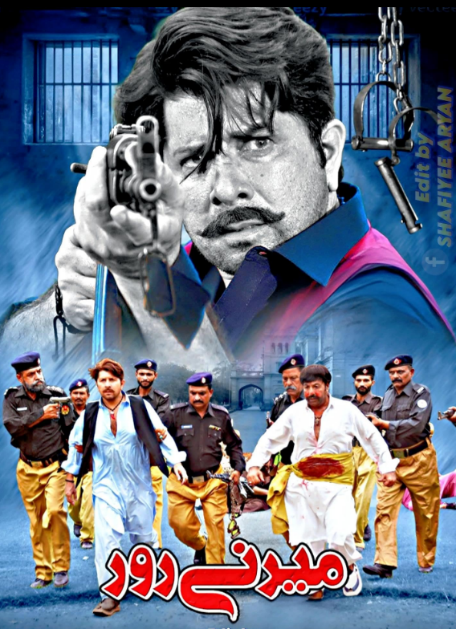
- Merane Ror 2025
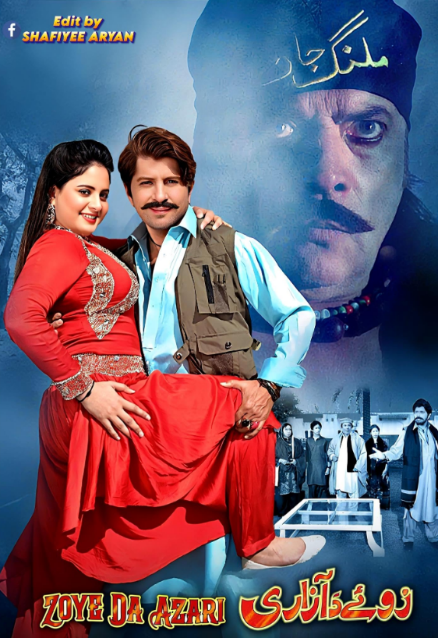
- Zoye Da Azari 2025
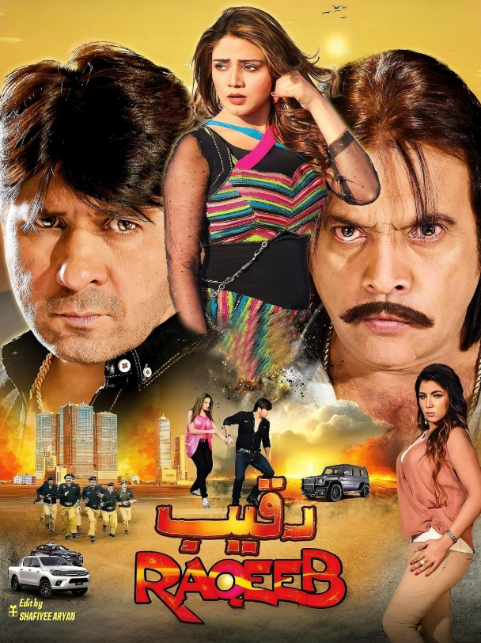
- Raqeeb 2024
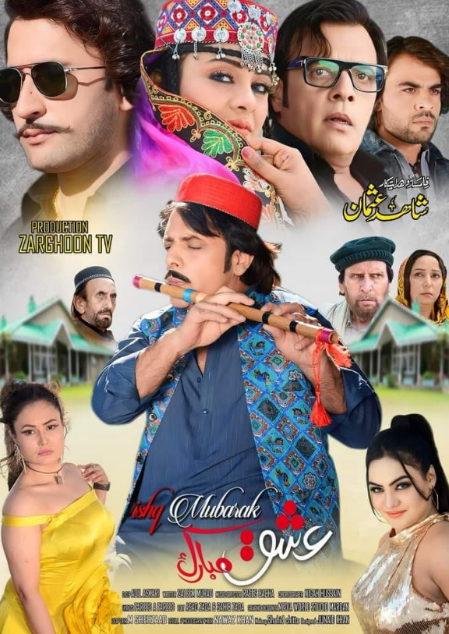
- Ishq Mubarak 2024
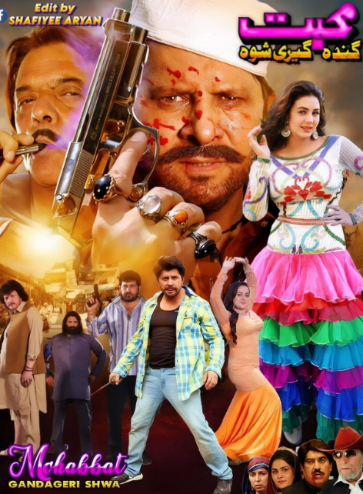
- Mohabbat Gandageri Shwa 2024
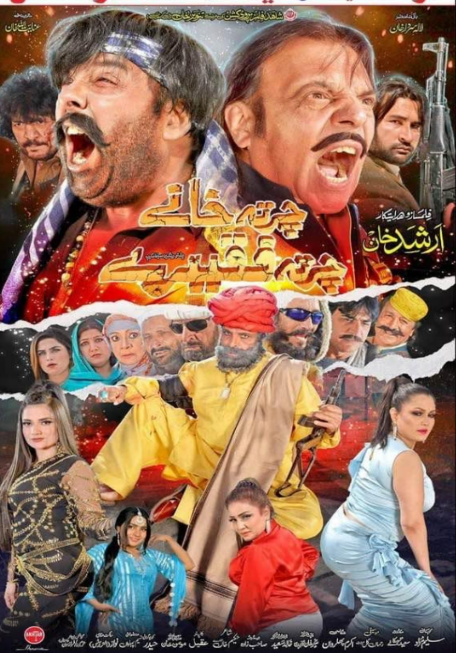
- Charta Khanay Charta Faqiray 2024.
- The visual analysis of each cover image defines the most important semiotic elements (representamen). (Peirce, 1931-1958)
- The object is identified through the connection of every visual substance to the corresponding cultural or social concept.
- The interpretant is inferred based on what meaning these elements might create in the minds of viewers including the extent to which they reinforce stereotypes or distort the Pashtoon culture.
- Records of analysis are made in a table of three, displaying the triadic relationship of representamen, object, and interpretant of each film cover.
Abstract
This paper will analyze how the cover images in the Pashto films represent and misrepresent the Pashtoon culture using the Triadic Model of Signs as given by Peirce. Based on six Pashto movie cover images published in 2024 and 2025, the research adopts the qualitative visual semiotic approach. The analysis focused on the relationship between the representamen (visual elements), the object (cultural concepts) and the interpretant (meanings created to viewers). The results show that the portrayal of the Pashtoon culture has the tendency to repeat, specifically the focus on hyper-masculinity, weapons and conflicts, rural themes, and traditional gender roles. Although some of the cover images depict cultural values while others tend to simplify or stereotype Pashtoon culture, thus partially misrepresenting it. The paper highlights the need for more subtle and well-balanced visual representations of the Pashtoon culture in Pashto cinema.
Keywords
Pashtoon Culture, Cover Images, Visual Semiotics, Peirce's Triadic Model, Cultural Representation, Media Discourse
Introduction
The visual media are effective tools in the construction and communication of the cultural identity. Film cover images and posters are among other forms of media that are important in creating a perception among the audience, interpret cultural values, and create social narratives before the viewer actually watches the content of the film (Barthes, 1977; Hall, 1997). These visual products are not simply promotions, they encode symbols, gestures, colors and structures that have culturally and socially embedded meanings (Kress and van Leeuwen, 2006). Visual representations in film posters have been found to be used in South Asian media practices, especially in Pakistan, to show the existing social norms, gender roles, and cultural stereotypes (Sheikh and Nadeem, 2020; Latki et al., 2025).
Pashto cinema is a major local industry in Pakistan and it is often influenced by the classical Pashtoon cultural themes, countryside setting, tribal pride, masculine heroism and social gender roles. In the initial analysis of Pashto film cover images it can be seen that the depictions are usually focused on male domination, aggression and romance and female characters are either ornamental or sidelined. These images cast significant doubts about the authenticity, oversimplification, and possible stereotyping of the Pashtoon culture in the visual media.
This paper will consider such issues by reviewing six modern Pashto film cover images, such as Merane Ror (2025), Zoye Da Azari (2025), Raqeeb (2024), Ishq Mubarak (2024), Mohabbat Gandageri Shwa (2024), and Charta Khanay Charta Faqiray (2024), all of which are available on IMDb, n.d The study uses the Triadic Model of Signs by Peirce as a theoretical and analytical model which helps to explore the representamen (visual elements), object (cultural concepts), and interpretant (meaning generated) in a systematic way.
Research Questions
Following are research questions of the study:
Research Objectives
The objectives of the study are:
Literature Review
The visual media have become central in the development of cultural meanings and perception amongst people in the contemporary societies. Film posters and cover images are just but a few examples of visual forms that create powerful semiotic artifacts that reduce the narratives, ideologies and cultural identities to a single frame of visual representation. Hall (1997) argues that representation is not only a reflection of the reality, but it is a process by which meaning is created and exchanged within a culture. Visual representations are thus actively involved in the construction of cultural identities, as they pick and highlight as well as arrange specific signs and symbols.
Film posters are best known as visual texts, which convey genre, character, emotional and cultural values even before viewers get to interact with the cinematic text itself (Barthes, 1977; Kress and van Leeuwen, 2006). Posters are semiotic tools that help direct the audience in terms of interpretation and anticipation through the use of color, posture, facial expression, clothing, and space. Empirical research on film posters in various cultural settings proves that the use of these visual objects is strategically used to create culturally recognizable meanings and support powerful discourses (Dyer, 1993). A semiotic analysis of Pashto film posters by Mukhtar et al. (2020) proves that the visual signs frequently feature aggression, honor, and male dominance as the defining signs of the Pashtoon identity. Although these representations are based on familiar cultural symbols, they can also oversimplify or stereotype the Pashtoon culture by focusing on a small group of interpretations and ignoring other cultural realities.
Altogether, available literature confirms that film posters and cover images are culturally charged texts that play a critical role in identity formation and meaning-making. Nevertheless, despite the fact that the topic of representation in Pakistani and Pashto visual media has been touched upon in earlier works, little has been done with the topic of Pashto film cover pictures as independent semiotic texts. Additionally, a theoretically based analysis, which has a logical investigation of how visual signs create meanings that lead to the (mis)representation of the Pashtoon culture is also lacking. This gap reiterates the significance of the current study which places the Pashto film cover images in a semiotic context to explore how it affects cultural perceptions.
Despite the fact that the previous studies prove the powerful impact of visual media on cultural meanings formation, they demonstrate the same negative aspects of stereotyping and simplification in film posters and promotional photos. Research of Hollywood and Pakistani film posters shows that the visual framing tends to support the most prevalent gender roles, patriarchal values, and culturally standard plots (Khan and Akhtar, 2024; Sheikh and Nadeem, 2020; Latki et al., 2025). These findings can be interpreted as implying that film posters are not only a marketing tool, but also a place where ideology and cultural assumptions are replicated.
Nonetheless, there is a lack of studies that directly cover the visualization of the Pashtoon culture. Although Mukhtar et al. (2020) use the triadic model of Peirce to examine Pashto film posters, the analysis only provides a sketch overview of the repetitive visual imagery, including traditional clothing and male supremacy. In the same manner, Jamshaid et al. (2022) observe that conflict and aggression are often highlighted in Pashto film posters, which are directed at degrading images of Pashtoon identity. The literature on ethnic representation is also broader, which suggests that visual media might perpetuate cultural prejudice and influence the perception of the audience in a problematic manner (Kagan et al., 2022; Naeem and Javed, 2025). Overall, the studies show a gap that is a lack of theoretically-based and focused analysis of how the Pashtoon culture is created and may be misconstrued in the Pashto film cover images.
The given gap is filled in this research through a semiotic analysis of the (mis)representation of the Pashtoon culture in Pashto film cover images. The analysis will be conducted through the theoretical framework of the Triadic Model of Signs given by by Peirce, by studying the relationship between visual elements (representamen) and cultural objects to create interpretants that define the perceptions of Pashtoon identity. The study by reading film cover images as significant semiotic texts brings out strong visual patterns and possible distortions that the images contain. Through this approach, the study will add to the literature on visual semiotics and cultural representation by providing a culturally-based analysis of local cinema. The findings are expected to contribute to the better understanding of the role of visual media in the process of ethnic identity formation and to foster more realistic and authentic forms of Pashto culture in the promotions of Pashto films.
Methodology
The research adopts qualitative semiotic approach to investigate how Pashtoon culture has been misrepresented in the cover images of Pashto films. The interpretation is carried by the Triadic Model of Signs designed by Peirce that explores the connection between representamen, the visuals that appear on the cover such as clothing, gestures, setting, object, the cultural notion or fact that the visual sign describes such as Pashtoon masculinity, honor, traditional lifestyle and interpretant, the meaning that is created in the mind of the viewer with possible stereotypes or wrong representations.
This structure enables the research to unpack in a systematic way the way visual signs convey and transmit the cultural meanings in film cover images. The purposive selection of six Pashto film cover images is carried out in terms of their popularity and the presence of culturally marked signs, including traditional dress, gender roles and signs of violence. Such a choice results in the possibility of a focused semiotic analysis of the ways Pashtoon culture is depicted and distorted in the cover images of Pashto films.
Source: IMDb feature films in the Pashto language, sorted by release date (https://www.imdb.com/search/title/?title_type=feature&primary_language=ps&sort=release_date,desc).
Selected Films
Analytical Procedure
This would be a way of being transparent and replicable so that the reader can get a glimpse of how visual elements are being interpreted in terms of semiotics.
Data Analysis
Below is the set of cover images of the selected Pashto films used for this study.
Zoye Da Azari 2025
Raqeeb 2024
Charta Khanay Charta Faqiray 2024
In order to critically investigate the visual representations and misrepresentations of the Pashtoon culture, the six Pashto film cover images were examined through the triadic model of signs by Peirce. This model consists of the representamen, object and interpretant. This framework allows a systematic understanding of visual signs, it connects what is visually given with the cultural meaning it is referring to and the meaning that it produces. The summarized table 1 presents the main semiotic findings indicating how the visual elements can be considered as the markers of cultural representation and at the same time serve as the sources of misrepresentation.
Table 1 Semiotic Analysis of Representation and Misrepresentation of Pashtoon Culture in Pashto Film Posters
| Film Title | Representamen (Visual Features) | Object (Cultural Concept) | Interpretant (Representation and Misrepresentation) |
| Merane Ror (2025) | police escort, handcuffs, prison bars, traditional male dress | Law, crime, masculine authority, justice | Representation: Pashtoon masculinity associated with strength and authority. Misrepresentation: Pashtoon men reduced to violent criminals or enforcers, culture framed as inherently lawless. |
| Zoye Da Azari (2025) | Male-female couple, traditional attire, male holding woman | Romance within cultural setting, patriarchal norms | Representation: Presence of family and romantic relations in Pashtoon society. Misrepresentation: Women shown as decorative and dependent, male dominance normalized as cultural essence. |
| Raqeeb (2024) | Aggressive male faces, police, cars and explosions, glamorous female figures in western attire | Conflict, revenge, spectacle-driven masculinity | Representation: Public male roles and conflict narratives. Misrepresentation: Pashtoon culture equated with chaos and violence, women in indecent dressing, contradicting norms of modesty and veiling. |
| Ishq Mubarak (2024) | folk instrument, traditional dress, rural imagery, marginal female presence, revealing dresses of women | Cultural heritage blended with action | Representation: Visual inclusion of Pashtoon cultural symbols and folk identity. Misrepresentation: women sexualized through indecent dressing, contradicting norms of modesty and veiling. |
| Mohabbat Gandageri Shwa (2024) | Blood-stained male face, pistols, majority men figures | Revenge, emotional intensity, heroism | Representation: Emotional depth and struggle in Pashtoon narratives. Misrepresentation: Masculinity defined through brutality, women's attire and positioning contradict everyday Pashtoon norms of long dress and veil. |
| Charta Khanay Charta Faqiray (2024) | Shouting male figures, exaggerated expressions, weapons, large ensemble cast; glamorous women figures at bottom | Social conflict and power struggles, patriarchal norms | Representation: Collective social tensions and public masculinity. Misrepresentation: Pashtoon culture shown as as unruly and aggressive, conflict exaggerated as dominant cultural trait, women in indecent dressing, contradicting norms of modesty and veiling. |
Discussion
Through the analysis of six Pashto film cover images with the use of the triadic model that has been developed by Peirce, it is established that these images are simultaneously the sites of both cultural representation and cultural misrepresentation. At the level of the representation, the covers are heavily dependent on the commonly used cultural signifiers such as the Pashtoon traditional attire, countryside and city life, folk musical instruments and culturally defined manly appearance, such as moustaches and traditional headgears. The aspects may be employed to visually position the films in a Pashtoon culture and give the viewers familiar ethnic signifiers that can give them a feeling of a cultural identity. Also, the fact that male characters are more dominant in the story represents a social structure of the Pashtoon in which men are often occupying more high-profile posts in the community. The emphasis on authority, bravery and valor is in line with the masculinity ideals, as highly valued by Pashtoon community as also observed by Jamshaid et al., 2022 and Mukhtar et al., 2020. In that sense, the representamen of such covers is not presented to exist in a cultural vacuum, but, instead, applies socially familiar and significant symbols. However, this process of representation also tends to become misrepresentation when these cultural signs are exaggerated, detached and always associated with the violence and anarchy. The object of representation in the six covers is stripped of very thin type of crime, revenge and hyper-masculinity. This kind of framing renders the Pashtoon culture a monolithic identity that suffers its ethical codes, intellectual traditions, poetic heritage, hospitality and communal values. Through repetition, these signs form interpretants through which aggression is tamed as being part of the culture and not a narrative. Another representation is gender representation that also illustrates the struggle of representation and misrepresentation. Even though the inclusion of women indicates the attempts to prove the Pashtoon social life, the visual depiction of women is likely to reverse the cultural conventions of life. The female gender is usually represented in sensual or sensualizing garments, and is assigned the role of a decorative or romantic item. Nevertheless, within the traditional Pashtoon community, most of the women dress in long dresses and observe modesty even in the open places with the veil. The representational urge to possess women is thus transformed into misrepresentation whereby the cinema aesthetic dominates over the cultural reality. In addition to this, active-male and passive-female roles and positioning reinforce a deviant gender hierarchy. Men are associated with power, violence and authority and women with visual spectacle. The resulting selective visibility results in what Hall (1997) calls fixing of meaning where certain traits are repeated and repeated and other traits are not repeated. When combined, these findings suggest that the Pashto film cover pictures are a two-sided semiotic process. On the one hand, they can represent cultural symbols and identities of Pashtoon people with the help of common cultural symbols. On the other hand, they misrepresent that culture by giving more emphasis on violence, objectifying women and isolating other cultural discourses. These visual patterns being repeated in multiple covers are known to support stereotypical interpretants and limit the amount of senses that viewers can use. In general, visual discourse of Pashto film cover pictures is the expression of a complex interaction between representation and misrepresentation. Even though these pictures are able to bring the culture of the Pashtoon into the media world, it does so in a reductionist and sensationalized way which distorts the cultural realities in a skewed way. This sort of duality is crucial since it indicates the necessity to critically examine promotional images as the possible arenas of cultural meaning-making and not the mirror of the society.
Conclusion
The paper has analyzed how the Pashtoon culture was represented and misrepresented in the Pashto film cover pictures using the triadic model of signs as proposed by Peirce. Through the analysis of six chosen film covers, the study revealed the role of promotional graphics as a semiotic site where the cultural meanings are created, reproduced and normalized. The results show that such images are not just promoting the movie content but also constructing the image of the Pashtoon people in the minds of people. The film covers at the level of representation utilize familiar cultural signs that include traditional dress, masculine appearance, folk symbols and familiar social roles that place the films in a Pashtoon cultural context. These aspects make cultures visible and indicate ethnicity to viewers. This process of representation, however, often turns into misrepresentation when these cultural signs are over and over again linked to violence, hyper-masculinity, and social disorder. The interpretation also outlines a continued gendered misrepresentation. Although women are the subject of a few cover pictures, their image is usually against the daily Pashtun standards of modesty, length of dress and veil. Instead, women are visualized in a decorative manner, which emphasizes more on commercialism rather than cultural authenticity. This misrepresentation supports the stereotypical beliefs and excludes the lived experiences of Pashtoon women.
On the whole, it can be concluded that Pashto film cover pictures are dual semiotic processes because they render Pashtoon culture visible, and at the same time, they narrow it down to a few and sensationalized meanings. The recurring violent and gendered images are part of the mending of the cultural stereotypes and deny a chance to think of other ways of interpreting the Pashtoon identity. Using the triadic model developed by Peirce, this study demonstrates the significance of the critical approach to visual media texts, especially the promotional images, as the powerful tools in the process of constructing cultural knowledge. This question can be broadened by future studies that investigate the audience response or the comparison of visual constructions in local cinemas to gain a deeper understanding of the cultural representation process in South Asian media.
References
- Barthes, R. (1977). Image, music, text (S. Heath, Trans.). Fontana Press. https://monoskop.org/images/0/0a/Barthes_Roland_Image-Music-Text.pdf
- Dyer, R. (1993). The matter of images: Essays on representations. Routledge. https://www.routledge.com/The-Matter-of-Images-Essays-on-Representations/Dyer/p/book/9780415254953
- Hall, S. (1997). Representation: Cultural representations and signifying practices. Sage.
- Latki, Y. H., Hiba, Komal, H., Munawar , A., & Umna Tasleem. (2025). A semiotic and multimodal analysis of Pakistani television drama posters. Journal of Social Horizons, 2(1), 358-367. https://doi.org/10.5281/zenodo.16150641
- IMDb. (n.d.). Feature films in Pashto language [Film cover images]. IMDb. https://www.imdb.com/search/title/?title_type=feature&primary_language=ps&sort=release_date,desc
- Jamshaid, S., Khan, R., & Khan, A. (2022). Cinematic posters as cultural mirrors: The role of Pushto film posters in shaping Pukhtoon cultural identity. Migration Letters, 19(S5), 1792–1806. https://migrationletters.com/index.php/ml/article/view/12144
- Kagan, D., Levy, M., Fire, M., & Alpert, G. F. (2024). Ethnic representation analysis of commercial movie posters. Humanities and Social Sciences Communications. 11(1). https://doi.org/10.1057/s41599-023-02040-y
- Khan, M., & Akhtar, R. (2024). Framing femininity: Analyzing visual objectification and gender dynamics in Hollywood movie posters. Educational Administration: Theory and Practice, 30(11), 1164–1174.
- Kress, G., & van Leeuwen, T. (2006). Reading images: The grammar of visual design (2nd ed.). Routledge.
- Mukhtar, Y., Iqbal, L., & Rehman, F. (2020). Representation of Pashtun culture in Pashto films posters: A semiotic analysis. Global Language Review, 5(1), 281–292. https://doi.org/10.31703/glr.2020(V-I).31
- Naeem, W., & Javed, I. (2025). Misrepresentation or marginalization? A study on Pashtun depiction in entertainment media. Journal of Media Horizons, 6(7), 715–726. https://jmhorizons.com/index.php/journal/article/view/1170
- Peirce, C. S. (1931–1958). Collected Papers of Charles Sanders Peirce (Vols. 1–8, C. Hartshorne, P. Weiss, & A. W. Burks, Eds.). Harvard University Press.
- Sheikh, A. A., & Nadeem, U. (2020). An investigation into gender roles in selected Pakistani film posters: A multimodal analysis. Pakistan Journal of Gender Studies, 20(1), 1–16. https://www.socialsciencejournals.pjgs-ws.com/index.php/PJGS/article/view/788
Cite this article
-
APA : Javid, L., & Barkah. (2025). Visual (Mis)Representation: Pashtoon Culture in Pashto Film Cover Pictures. Global Social Sciences Review, X(IV), 152-160. https://doi.org/10.31703/gssr.2025(X-IV).12
-
CHICAGO : Javid, Laiba, and Barkah. 2025. "Visual (Mis)Representation: Pashtoon Culture in Pashto Film Cover Pictures." Global Social Sciences Review, X (IV): 152-160 doi: 10.31703/gssr.2025(X-IV).12
-
HARVARD : JAVID, L. & BARKAH. 2025. Visual (Mis)Representation: Pashtoon Culture in Pashto Film Cover Pictures. Global Social Sciences Review, X, 152-160.
-
MHRA : Javid, Laiba, and Barkah. 2025. "Visual (Mis)Representation: Pashtoon Culture in Pashto Film Cover Pictures." Global Social Sciences Review, X: 152-160
-
MLA : Javid, Laiba, and Barkah. "Visual (Mis)Representation: Pashtoon Culture in Pashto Film Cover Pictures." Global Social Sciences Review, X.IV (2025): 152-160 Print.
-
OXFORD : Javid, Laiba and Barkah, (2025), "Visual (Mis)Representation: Pashtoon Culture in Pashto Film Cover Pictures", Global Social Sciences Review, X (IV), 152-160
-
TURABIAN : Javid, Laiba, and Barkah. "Visual (Mis)Representation: Pashtoon Culture in Pashto Film Cover Pictures." Global Social Sciences Review X, no. IV (2025): 152-160. https://doi.org/10.31703/gssr.2025(X-IV).12